
Underwater Acoustic Sensing Equipment Supports Marine Observation and Environmental Monitoring
The ocean remains one of the most challenging environments to observe and understand. Its vastness, pressure, and opacity limit the reach of conventional optical sensors. Yet for marine researchers, offshore operators, and environmental monitoring teams, accurate data from beneath the surface is essential. This is where underwater acoustic sensing equipment becomes invaluable.
Sound travels efficiently through water, often over long distances, making acoustic techniques among the most effective tools for studying the ocean. FrankStar Technology, a company dedicated to ocean observation and marine environmental monitoring, offers underwater acoustic sensing equipment designed to support these demanding applications.
Understanding Underwater Acoustic Sensing
Underwater acoustic sensing refers to the use of sound to gather information about the underwater environment. Unlike light or radio waves, acoustic signals can propagate through seawater with relatively low attenuation, allowing them to reach depths and distances that are otherwise inaccessible.
By transmitting sound pulses and analyzing the returning echoes, or by passively listening to ambient underwater noise, acoustic systems can detect objects, map the seafloor, measure water column properties, and even track marine life. This technology underpins a wide range of oceanographic activities, from hydrographic surveys to biological monitoring.
Why Acoustic Technology Matters in Marine Monitoring
The health of the ocean is directly linked to the health of the planet. Climate change, pollution, offshore energy development, and increased maritime traffic all place stress on marine ecosystems. To manage these pressures effectively, scientists and environmental managers require high-resolution, long-term data from the ocean.
Underwater acoustic sensing provides a unique window into this world. It can reveal the presence of fish schools, map submerged vegetation, detect underwater noise from vessels or construction, and even monitor the movement of water masses.
| Application Area | Key Monitoring Value | Typical Equipment |
|---|---|---|
| Marine Acoustic Survey | Seafloor mapping, water column detection, object identification | Acoustic recorders, hydrophone arrays |
| Marine Mammal Tracking | Passive detection, migration monitoring, population study | Self-contained acoustic recorders |
| Offshore Wind Farm Noise Assessment | Baseline noise measurement, construction noise monitoring | Underwater noise monitors, real-time analyzers |
| Offshore EIA | Environmental impact assessment, long-term noise data collection | Autonomous acoustic sensing systems |
| Underwater Construction Monitoring | Pile driving noise, operational safety, compliance recording | Real-time noise analyzers, hydrophone arrays |
FrankStar Technology Underwater Acoustic Sensing Equipment
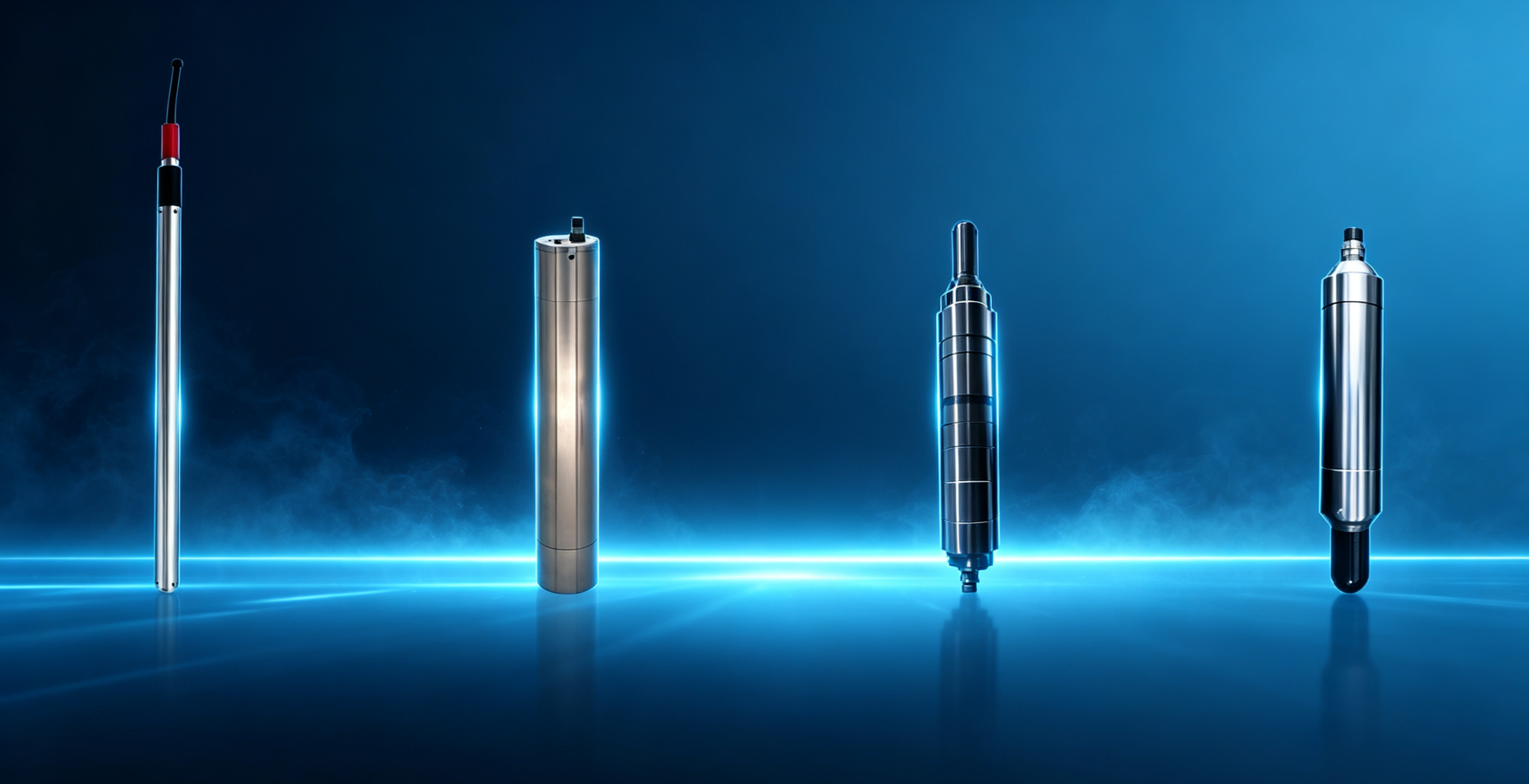
FrankStar Technology independently develops and manufactures professional underwater acoustic sensing instruments. The product portfolio includes self-contained acoustic recorders, real-time underwater noise analyzers, underwater noise monitors, and multi-element hydrophone arrays.
The equipment is designed for ultra-low power consumption, ultra-low self-noise, high receiving sensitivity, microsecond time synchronization, and titanium alloy housing capable of withstanding depths up to 6000 meters. All products support deployment on mooring platforms, ocean buoys, gliders, and subsea observation networks.
Product Portfolio Overview
| Product Series | Core Function | Key Features |
|---|---|---|
| ARMS | Underwater Acoustic Noise Monitor | 10Hz–10kHz band, 29.1dB@1kHz self-noise, titanium alloy housing |
| ULAR | Self-Contained Acoustic Recorder | Up to 365 days endurance, 4TB storage, <1μs synchronization |
| RASP | Underwater Noise Analyzer | Offline recording and real-time streaming, Ethernet/RS485 output |
| SHAR | Self-Contained Hydrophone Array | Up to 128 channels, 6000m depth rating, lightweight deep-sea design |
ARMS Underwater Acoustic Noise Monitor
The ARMS series is an integrated self-contained underwater acoustic acquisition unit, designed for long-term marine acoustic monitoring, underwater engineering inspection, and fundamental underwater acoustic research.
Core Advantages
- Wide frequency band: 10Hz–10kHz with flat full-band response
- Ultra-low equivalent self-noise: 29.1dB@1kHz
- All-in-one integrated design for standalone underwater deployment
- First-class underwater acoustic metrology calibration available
- Stable performance under complex marine underwater environments
Key Specifications
| Parameter | Value |
|---|---|
| Hydrophone Sensitivity | -201±1.5 dB re. 1V/μPa |
| Preamp Gain Option | 0/20/26/30 dB |
| Max Sampling Rate | 64 kHz |
| Housing Material | Titanium Alloy |
ULAR Self-Contained Acoustic Recorder
The ULAR series is an ultra-low power standalone underwater acoustic recorder. It collects underwater sound, temperature, and depth synchronously for unattended long-period recording missions.
Core Advantages
- Ultra-low power: Operating ≤150mW, Sleep ≤1mW
- Endurance up to 365 days
- Two frequency options: 20Hz–20kHz / 20Hz–100kHz
- Synchronization accuracy: <1 μs
- Expandable storage up to 4 TB
- 200m plastic / 6000m titanium alloy pressure housing optional
Key Specifications
| Parameter | Value |
|---|---|
| Continuous Recording Duration | Up to 12 months |
| Storage Capacity | Max 4 TB |
| Sync Accuracy | <1 μs |
| Depth Rating | 200 m / 6000 m |
RASP Underwater Noise Analyzer
The RASP series is a real-time underwater noise analyzer supporting offline self-contained recording and online data streaming. It can be mounted on buoys, seabed platforms, and mobile observation carriers.
Core Advantages
- Dual working modes: offline recording and real-time online transmission
- Output noise spectrum via Ethernet / RS485 for platform integration
- Multi-unit distributed synchronous observation
- Optional frequency band: 20Hz–20kHz / 20Hz–200kHz
- Wide working temperature: -10℃ ~ +60℃
Key Specifications
| Parameter | Value |
|---|---|
| Frequency Options | 20Hz–20kHz / 20Hz–200kHz |
| Interface | Ethernet, RS485 |
| Self-contained Battery Life | ≥48 hours |
| Depth Rating | 200 m / 6000 m |
SHAR Self-Contained Hydrophone Array
The SHAR series is a micro-power deep-sea digital hydrophone array system. It provides a high-precision multi-channel acoustic collector supporting expandable cable array up to 128 elements.
Core Advantages
- Supports up to 128 synchronous hydrophone channels
- Ultra-low self-noise performance
- Titanium alloy housing for 6000m deployment
- High-speed USB data access without opening housing
- Lightweight body: 870g in air, 530g underwater
Key Specifications
| Parameter | Value |
|---|---|
| Max Channels | 128 elements |
| Synchronization Accuracy | <1 μs |
| Max Depth | 6000 m |
| Weight | 870 g (air) / 530 g (underwater) |
Technology Needs and Operational Considerations
When selecting underwater acoustic sensing equipment, several factors come into play. Water depth, temperature, and salinity affect sound propagation. The frequency range of the acoustic sensor determines the size and type of objects or animals it can detect.
High-frequency systems provide fine resolution but shorter range, while low-frequency systems cover longer distances but with less detail. Users must choose equipment that matches their specific objectives.
Power EnduranceImportant for long-term unattended deploymentULAR
| Selection Factor | Consideration | Relevant Product |
|---|---|---|
| Frequency Band | Determines detection resolution and monitoring range | ARMS, ULAR, RASP, SHAR |
| Depth Rating | Must match deployment depth and pressure environment | ULAR, RASP, SHAR |
| Real-Time Output | Required for online monitoring and platform integration | RASP |
| Multi-Channel Detection | Used for beamforming, localization, and array applications | SHAR |
Conclusion
As global attention turns toward the ocean for food, energy, minerals, and climate regulation, the demand for effective ocean observation tools will only grow. Underwater acoustic sensing equipment stands out as one of the most versatile and reliable ways to explore and monitor the underwater world.
FrankStar Technology, with its focus on ocean observation and marine environmental monitoring, offers acoustic sensing solutions that meet the practical needs of scientists, engineers, and environmental professionals.
For buyers seeking equipment that provides consistent, dependable performance, FrankStar’s underwater acoustic sensing equipment represents a practical choice. The official product page offers a starting point, and the company’s sales team can provide further details to help match equipment to specific applications.
Post time: Sep-04-2026