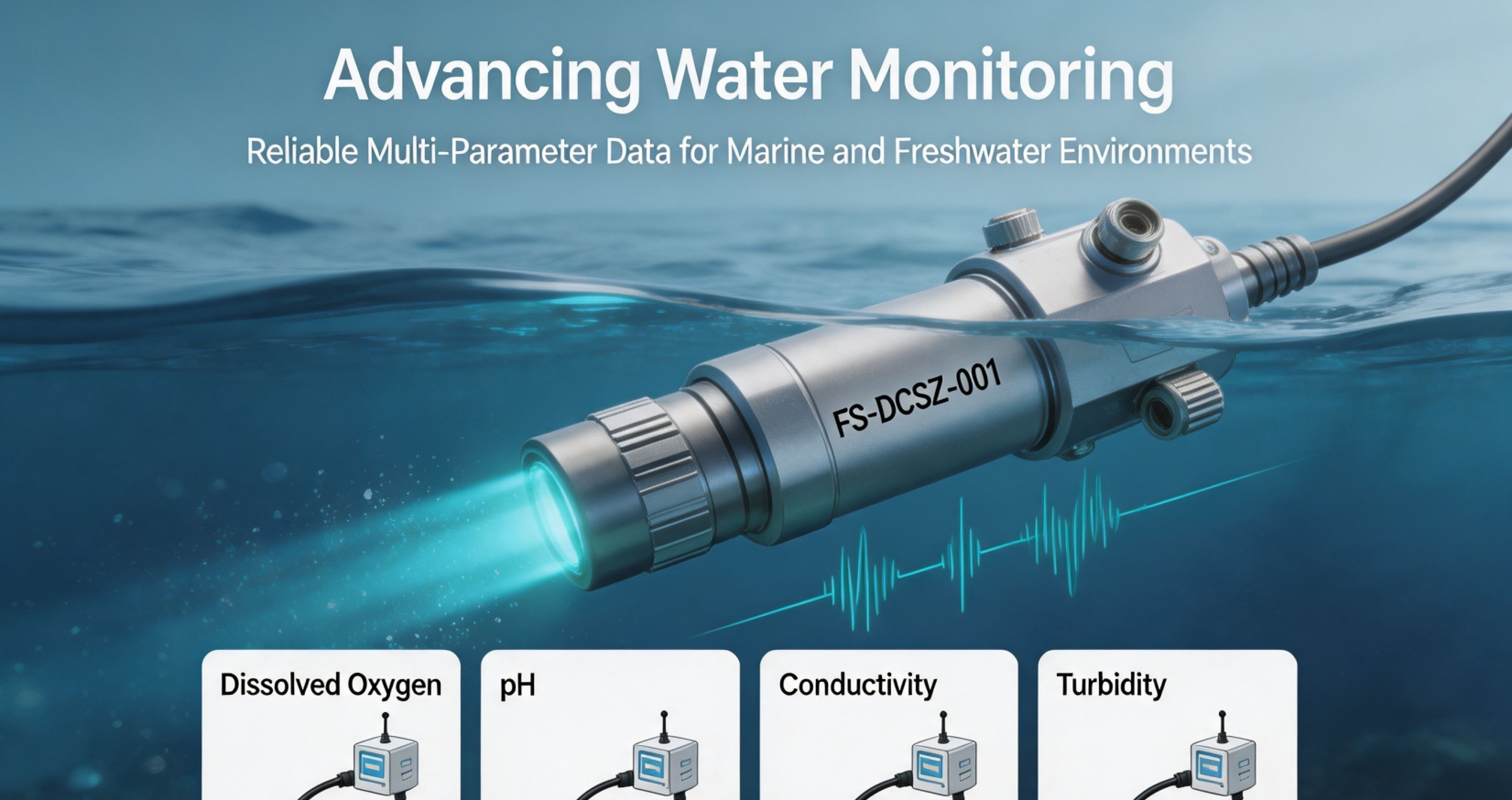
Advancing Water Monitoring with the Multi-Parameter Water Quality Sensor

Advancing Water Monitoring with the Multi-Parameter Water Quality Sensor

Water quality monitoring forms the backbone of environmental protection, industrial process control, and scientific research in marine and freshwater ecosystems. As global attention on ocean health intensifies and regulatory frameworks become more stringent, the demand for reliable, continuous, and multi-faceted water quality data has never been greater. Professionals in ocean observation, offshore operations, and environmental monitoring require instruments that deliver accurate readings under challenging field conditions. The FS-DCSZ-001 multi-parameter water quality sensor from Frankstar is designed to address exactly these requirements, offering an integrated approach to water quality data acquisition.

This article explores the technology behind the FS-DCSZ-001, its measurement principles, typical application scenarios, and the value it brings to marine researchers, environmental monitoring teams, and technical buyers seeking dependable water quality instrumentation.

Understanding Multi-Parameter Water Quality Monitoring

Traditional water quality assessment often relied on single-function probes or labor-intensive grab sampling followed by laboratory analysis. While these methods can provide snapshot data points, they lack the temporal resolution needed to capture dynamic changes in water conditions. Coastal zones, estuaries, aquaculture facilities, and offshore platforms experience rapid fluctuations in parameters such as dissolved oxygen, pH, conductivity, and turbidity. A multi-parameter approach addresses this gap by simultaneously tracking several key indicators through one integrated platform.

Multi-parameter water quality sensors consolidate multiple sensor elements into a single probe or sensor array. This integration simplifies deployment logistics, reduces the need for multiple cable runs and data loggers, and ensures that all measurements are referenced to the same water mass and time stamp. For long-term monitoring programs, this coherence is essential for understanding correlations between parameters and detecting subtle environmental changes.

The FS-DCSZ-001: Integrated Water Quality Data Acquisition

Frankstar’s FS-DCSZ-001 multi-parameter water quality sensor is a monitoring instrument developed specifically for water quality data acquisition. The sensor system obtains water quality parameters through multiple integrated sensors, each engineered to measure its corresponding parameter using the most suitable detection method.

Detection Methods Tailored to Each Parameter

Different water quality parameters require distinct measurement technologies to achieve the necessary accuracy and stability. The FS-DCSZ-001 employs three fundamental detection approaches across its sensor array:

- **Electrochemical detection**: Certain parameters, such as dissolved oxygen and pH, are measured using electrochemical principles. This method relies on the interaction between a sensing electrode and the target analyte in the water, producing an electrical signal proportional to the concentration of the parameter. Electrochemical sensors are valued for their specificity, fast response times, and suitability for continuous monitoring.

- **Optical detection**: Parameters like turbidity or dissolved organic matter can be measured optically. Optical sensors use light sources and detectors to measure how light is scattered, absorbed, or fluoresced by substances in the water. This non-contact method is highly sensitive, requires minimal maintenance compared to electrochemical counterparts for certain applications, and is not affected by electrochemical interferences.

- **Physical detection**: Physical properties such as temperature and conductivity are measured using physical detection methods. Temperature sensors typically employ precision thermistors, while conductivity sensors measure the ability of water to conduct an electrical current, which is directly related to the concentration of dissolved salts and minerals.

By combining these detection methods within one instrument, the FS-DCSZ-001 provides a comprehensive picture of water quality without the compromises associated with using separate single-function instruments.

Multi-Probe Architecture and Modbus Output

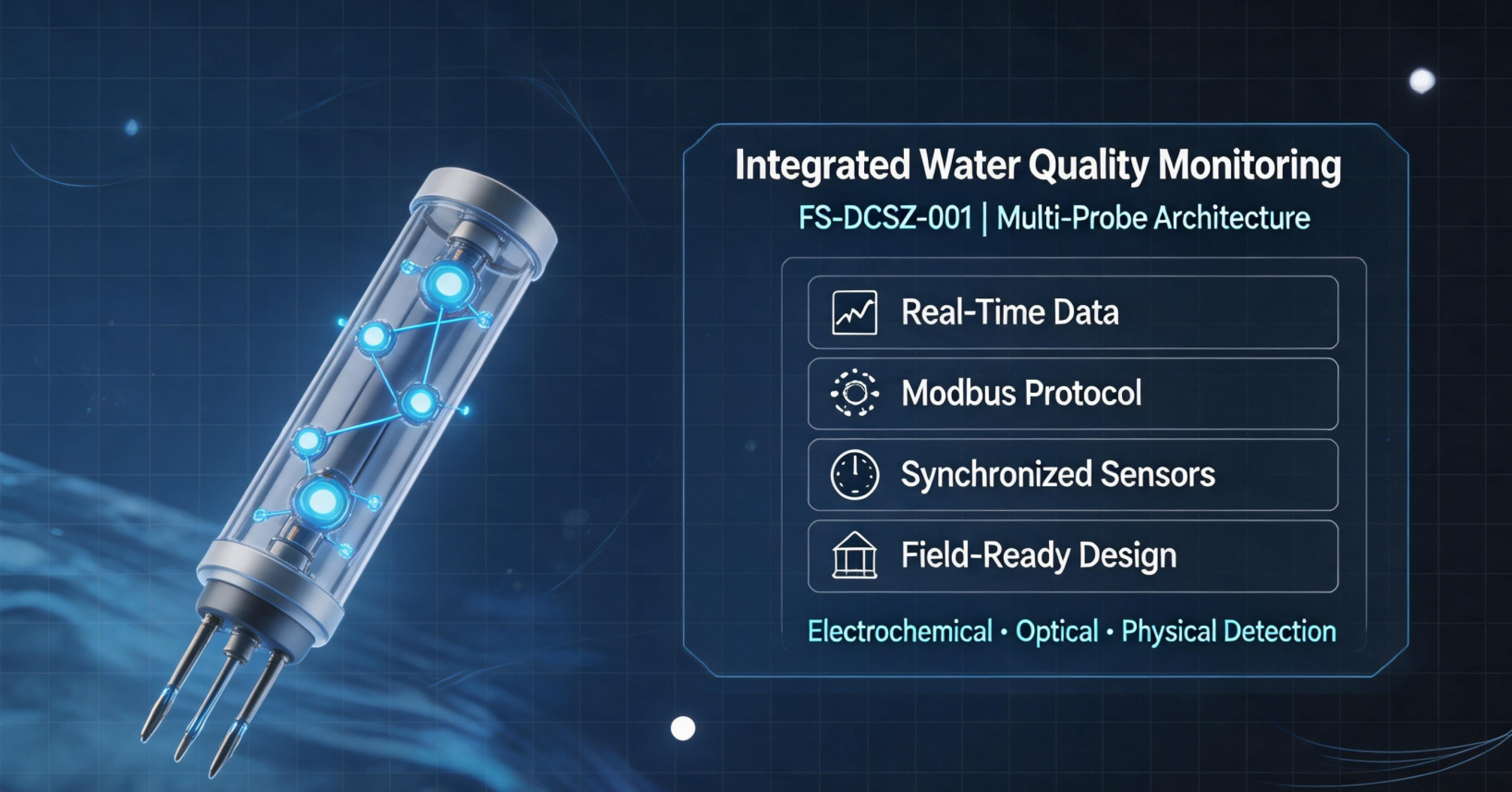
A key feature of the FS-DCSZ-001 is its multi-probe system architecture. Each parameter-specific sensor operates as part of a coordinated system, managed by internal electronics that handle signal conditioning, calibration, and data formatting. This architecture ensures that all sensor data is synchronized and easy to interpret.

The sensor system directly outputs data in Modbus format. Modbus is a widely adopted serial communication protocol in industrial and environmental monitoring applications. Its advantages include:

- Broad compatibility with data loggers, programmable logic controllers (PLCs), and supervisory control systems
- Robust error checking for reliable data transmission over long cable runs
- Standardized register mapping that simplifies integration into existing monitoring networks

For system integrators and operators managing large-scale monitoring networks, Modbus output minimizes the need for proprietary converters or software drivers. The FS-DCSZ-001 can be readily incorporated into established data acquisition systems, reducing setup time and ensuring data accessibility.

Applications in Marine and Environmental Monitoring

Frankstar’s focus on ocean observation and marine environmental monitoring is reflected in the design priorities of the FS-DCSZ-001. The sensor is suitable for a range of deployment scenarios where reliable water quality data is critical.

Ocean Observation and Coastal Research

Marine researchers studying coastal ecosystems, ocean acidification, or nutrient cycling require continuous records of key water quality parameters. The FS-DCSZ-001 can be deployed on moored buoys, fixed platforms, or research vessels to collect data over extended periods. The integrated multi-parameter approach allows scientists to observe how parameters such as dissolved oxygen and pH co-vary with temperature and salinity changes, providing deeper insight into biological and chemical processes.

Offshore Operations and Industrial Monitoring

Offshore oil and gas platforms, desalination plants, and power generation facilities using seawater for cooling all need to monitor intake and discharge water quality. Monitoring helps operators comply with environmental regulations, protect equipment from corrosion or biofouling, and minimize ecological impacts. The FS-DCSZ-001’s durable sensor integration and Modbus output make it a practical choice for industrial monitoring applications where reliability and ease of data integration are paramount.

Environmental Monitoring Networks

Government agencies and environmental consultancies operate water quality monitoring networks to track the health of rivers, lakes, reservoirs, and marine protected areas. Standardizing on a multi-parameter platform like the FS-DCSZ-001 simplifies maintenance scheduling, reduces spare parts inventory, and provides consistent data formats across monitoring stations. The ability to output data directly in Modbus format allows these agencies to feed real-time data into public portals or internal decision-support tools.

Aquaculture and Fisheries Management

Fish farms and shellfish operations depend on stable water quality for stock health and growth rates. Rapid drops in dissolved oxygen or spikes in ammonia can lead to catastrophic losses if not detected early. Integrating the FS-DCSZ-001 into automated monitoring systems gives farm managers the real-time data they need to activate aeration systems, adjust feeding regimes, or take other corrective actions. The multi-parameter sensor reduces the number of individual probes and cables required, streamlining the monitoring setup in often harsh and corrosive environments.

Value for International Buyers and Technical Teams

For overseas sales and distribution partners communicating with international buyers, the FS-DCSZ-001 presents several practical advantages. The sensor’s multi-parameter integration addresses the common pain point of managing multiple single-function instruments. Procurement teams benefit from simplified vendor management, while field technicians appreciate reduced installation and maintenance complexity.

Technical buyers will note the importance of the Modbus output protocol. In projects where data must flow into supervisory control and data acquisition (SCADA) systems, environmental information management systems, or custom dashboards, Modbus compatibility ensures that data integration does not become a bottleneck. This protocol-based approach aligns with the expectations of international engineering and consulting firms accustomed to working with industrial communication standards.

Distributors supporting customers in developing countries or remote locations will find that the integrated design reduces logistical burdens. Shipping, storing, and servicing one multi-parameter sensor is more efficient than managing separate probes, cables, and connectors for each parameter. The inherent coherence of data collected by a single multi-probe system also reduces post-processing efforts, allowing users to spend more time on analysis and decision-making.

Commitment to Reliable Ocean Technology

Frankstar’s commitment to ocean observation and marine environmental monitoring is reflected in the thoughtful engineering of the FS-DCSZ-001. By combining electrochemical, optical, and physical detection methods into an integrated multi-probe system, the sensor addresses the need for comprehensive water quality data in a single, manageable package. The direct Modbus data output ensures that the instrument fits smoothly into modern monitoring architectures, supporting both standalone research projects and large-scale industrial monitoring arrays.

As water quality challenges become more complex and the demand for continuous data grows, instruments like the FS-DCSZ-001 will continue to play a central role in understanding and protecting our water resources. For more information about the sensor’s design and capabilities, interested parties can visit the official product page at frankstartech.com.

Conclusion

The FS-DCSZ-001 multi-parameter water quality sensor represents Frankstar’s practical approach to water monitoring technology. It combines multiple detection principles within a single coherent system, delivering synchronized water quality data through the widely adopted Modbus protocol. For marine researchers, offshore operators, environmental monitoring teams, and international distributors, this sensor offers a credible and efficient tool for gathering the accurate water quality information that drives informed decisions and protects valuable water ecosystems.

Explore the FS-DCSZ-001 and Frankstar’s broader range of ocean technology solutions to discover how reliable environmental monitoring can support your next project.*


Post time: Aug-07-2026