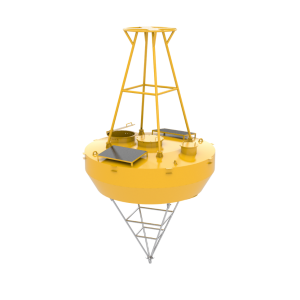
Deep-Ocean Tsunami Early Warning Buoy System for Coastal Safety & Metocean Monitoring

Deep-Ocean Tsunami Early Warning Buoy System for Coastal Safety & Metocean Monitoring,
deep ocean assessment buoy, metocean monitoring buoy, oceanographic buoy system, real-time wave monitoring buoy, seafloor pressure sensor buoy, Tsunami buoy, tsunami early warning system,
1. Product Advantages
-
Deep-Sea Tsunami Monitoring: Pressure detectors deployed on the seabed continuously acquire pressure data and invert sea level variations to effectively identify tsunami long-wave signals in open and deep ocean environments.
-
Underwater Acoustic Data Transmission: Both the seabed base station and surface main buoy are equipped with acoustic communicators to transmit and receive underwater data reliably.
-
Optional Multi-Satellite Communication Modes: Fitted with satellite communication modules supporting satellite or low-orbit satellite communication for remote data transmission in far oceans.
-
Anomaly Identification & Alert Reporting: Identifies anomaly events based on pressure and water level variations; automatically switches to intensive data reporting mode when preset thresholds are exceeded.
-
Recoverable Subsea Equipment: Seabed base station features releasers and floats that separate the subsea device from the anchoring structure during recovery, allowing it to float to the surface.
-
Modular Expansion Capability: Supports integration of various marine environmental sensor modules for multi-scenario applications.
2. Product Parameters
-
General Specification Parameters:
-
Buoy Hull Dimension: Diameter: 3.0 m; Total Height: 6.5 m
-
Weight: Approx. 1.5 tons
-
Material: Hull: CCSB grade steel; Mast: Aluminum alloy; Lower bracket: CCSB grade steel
-
Coating: Anti-corrosion paint
-
Mooring System Composition: Anchor chains/cables + sinkers / high holding power anchors
-
Power Supply & Endurance: Solar power system (PV panels + controller + storage batteries)
-
PV Panels: Max charging power: 480 W (6 x 80 W panels)
-
Storage Batteries: Maintenance-free lead-acid batteries; Standard capacity: 800 Ah, expandable to 1600 Ah
-
Endurance: ≥1 year under normal sunlight conditions
-
Underwater Data Communication: Acoustic communication
-
Overwater Data Communication: Satellite / Low-orbit satellite communication (optional)
-
Navigation & Anti-Collision Devices: AIS transponder, navigation light, lightning arrester, corner reflector
-
Alarms: Water leakage alarm, hatch opening alarm, position deviation alarm; optional boarding alarm
-
Cloud Platform: Intelligent Networking System for Marine Equipment (Device management, Data management, Customizable functions)
-
Access Method: Cloud access via internet; local PC version customizable
-
Seabed Base Station Weight: Approx. 850 kg
-
Operating Water Depth: 200 – 6000 m
-
Reserve Buoyancy: 100 kg
-
-
Pressure Sensor Parameters:
-
Temperature Range: -5 to 35°C
-
Temperature Initial Precision: ±0.002°C
-
Temperature Resolution Ratio: 0.00005°C
-
Temperature Conventional Stability: 0.002°C / year
-
Temperature Time Constant: 30s
-
Pressure Range: 4000 / 7000 dbar
-
Pressure Initial Precision: ±0.01% of full scale
-
Pressure Resolution Ratio: 10 ppb, sampling rate of 1 Hz
-
-
Underwater Acoustic Transmission Device Parameters:
-
Center Frequency: 10 kHz
-
Communication Direction: Taper
-
Maximum Communication Distance: 6 / 12 km
-
Maximum Operating Water Depth: 7 / 11 km
-
Peak Communication Rate: 850 bps – 10 kbps
-
Internal Storage: 16 GB
-
External Interface: RS232 / RJ-45 / RS422
-
Hibernation Power Consumption: 0.7 mW
-
Monitoring Power Consumption: 10 mW
-
Reception Power Consumption: 1.6 W / 2 W
-
Transmission Power Consumption: Adjustable range: 2-60 W / 250 W
-
Weight: Approx. 10 kg
-
3. Product Models
-
FS-MDB Series Tsunami Buoy
4. Product Purpose
-
Serves as vital equipment for real-time, reliable data support for tsunami monitoring, early warning assessment, and emergency response.
5. Product Application
-
High Tsunami-Risk Sea Areas: Deployed for deep-sea monitoring and early warning networks.
-
Seismically Active Submarine Zones: Continuous seabed pressure variation tracking.
-
Deep-Sea Observation Sections & Offshore Waters: Marine disaster early warning network construction and scientific research observation.
“Data is for reference only; actual conditions shall prevail.”
Frankstar Technology offers advanced Tsunami Early Warning Buoy Systems designed for reliable, real-time deep-ocean monitoring and coastal hazard prevention. The system combines high-precision seafloor pressure recorders (BPR) with surface telemetry buoys to deliver instant warning data during seismic and wave anomalies.
Key System Features:
High-Precision Acoustic Communication: Seamless data transmission between the seabed pressure sensor unit and the surface monitoring buoy.
Real-Time Satellite Telemetry: Equipped with satellite transmission modules (Iridium/Inmarsat) for uninterrupted, low-latency data delivery to monitoring stations worldwide.
Robust Marine Engineering: Constructed with corrosion-resistant, high-buoyancy materials and optimized mooring systems to withstand extreme offshore conditions and typhoons.
Multi-Parameter Integration: Optional expansion to incorporate sea surface temperature, salinity, wave height, and meteorological sensors for comprehensive metocean observation.
Primary Applications:
Vital for national meteorological agencies, marine disaster mitigation centers, coastal infrastructure protection, and oceanographic research institutions. Contact Frankstar Technology today for detailed technical specifications and customized offshore monitoring solutions.