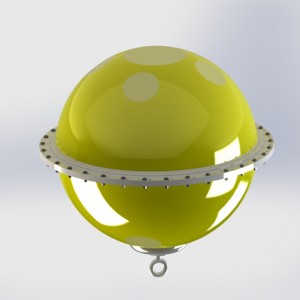
UV Fluorescent Chlorophyll Sensor for Aquatic Ecosystem Monitoring

UV Fluorescent Chlorophyll Sensor for Aquatic Ecosystem Monitoring,
316L stainless steel chlorophyll sensor, Aquatic Ecosystem Monitoring, blue-green algae monitoring, coastal algae monitoring, fluorescence-based algae sensor, harmful algal bloom monitoring, in-situ algae detection, industrial water quality sensor, MODBUS chlorophyll probe, reagent-free water monitoring, real-time chlorophyll measurement, reservoir water monitoring, turbidity compensation sensor, water quality sensor RS-485,
Feature
Small size, light weight
2.8 million sets of measurements
Configurable sampling period
USB Data Download
Pressure calibration before water entry
Technical Parameter
Housing material: POM
Housing pressure: 350m
Power: 3.6V or 3.9V disposable lithium battery
Communication mode: USB
Storage space: 32M or 2.8 million sets of measurements
Sampling frequency: 1Hz/2Hz/4Hz
Sampling period: 1s-24h.
Clock drift: 10s / year
Pressure range:20m、50m、100m、200m、300m
Pressure accuracy:0.05%FS
Pressure resolution:0.001%FS
Temperature range:-5-40℃
Temperature accuracy:0.01℃
Temperature resolution:0.001℃
Contact us for a brochure!
# UV Fluorescent Chlorophyll Sensor for Aquatic Ecosystem Monitoring
Monitoring the health of aquatic ecosystems demands precision, reliability, and the ability to operate autonomously in challenging environments. Frankstar’s UV fluorescent chlorophyll sensor is engineered to detect blue-green algae and chlorophyll concentrations with high accuracy, providing an essential tool for researchers, environmental agencies, and industrial operators tasked with safeguarding water bodies against harmful algal blooms.
This sensor is designed for seamless integration into long-term monitoring networks, offering stable performance without the need for chemical reagents. Its robust construction and intelligent signal processing make it suitable for deployment in lakes, reservoirs, coastal zones, and municipal water systems.
## Core Sensing Technology
At the heart of the sensor lies UV fluorescence detection technology. By exciting chlorophyll molecules with ultraviolet light and measuring the resulting fluorescence, the sensor directly quantifies algal biomass. This optical method is highly selective and sensitive, allowing for real-time, in-situ measurement of phytoplankton concentrations.
A key advantage of this approach is the automatic elimination of interference from suspended solids and turbidity. Traditional optical sensors can produce misleading readings when sediment or organic particles are present. The Frankstar chlorophyll sensor incorporates automatic turbidity compensation, which corrects the fluorescence signal based on in-situ water clarity. This ensures that the data reflects true chlorophyll levels rather than artifacts caused by variable water conditions.
## Reagent-Free and Environmentally Conscious Operation
Many conventional water analysis methods rely on chemical reagents that require frequent replenishment and generate hazardous waste. The UV fluorescent chlorophyll sensor operates entirely reagent-free, significantly reducing operational costs and environmental impact. This eco-friendly design supports extended deployments with minimal human intervention, making it an excellent choice for remote monitoring stations and protected natural areas.
## Integrated Self-Cleaning Mechanism
Biofouling and particle accumulation on optical surfaces are persistent challenges in long-term aquatic monitoring. To maintain measurement integrity, the sensor features an integrated self-cleaning mechanism. This automated function periodically clears the optical window, preventing the buildup of algae films, sediment, and other contaminants that could degrade signal quality. The result is consistent, maintenance-reduced performance over extended periods, even in high-biofouling environments.
## Durable Construction for Harsh Environments
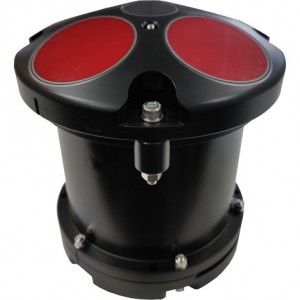
Built to withstand demanding marine and freshwater conditions, the sensor housing is crafted from 316L stainless steel. This material provides excellent corrosion resistance against both saltwater and chemically aggressive freshwater. With compact dimensions of 48 mm diameter and 125 mm length, the sensor is easy to integrate into multi-parameter sondes, profiling systems, or fixed monitoring stations without adding excessive bulk or weight.
The sensor’s pressure-tolerant design ensures reliable operation across a range of deployment depths typical for surface water, reservoir profiling, and nearshore coastal monitoring.
## Digital Communication and System Integration
Data accessibility and device interoperability are critical in modern monitoring networks. The chlorophyll sensor communicates via RS-485 using the industry-standard MODBUS protocol. This digital interface enables straightforward connection to data loggers, SCADA systems, telemetry units, and programmable logic controllers (PLCs). Engineers and technicians can reliably integrate the sensor into both new and existing infrastructure, with minimal configuration effort.
MODBUS output simplifies multi-parameter integration. When paired with complementary sensors for temperature, dissolved oxygen, or pH, this chlorophyll sensor becomes part of a comprehensive water quality profiling system delivering synchronized, high-resolution data streams.
## Applications Across Aquatic Environments
The UV fluorescent chlorophyll sensor addresses a wide spectrum of monitoring needs:
### Harmful Algal Bloom (HAB) Early Warning
In lakes, reservoirs, and drinking water sources, rapid detection of blue-green algae is essential for public health protection. Continuous chlorophyll monitoring provides early indication of bloom development, allowing water managers to activate treatment processes or issue advisories before toxins reach dangerous concentrations.
### Coastal and Estuarine Ecosystem Health
Nutrient runoff and warming waters contribute to increasing algal activity in coastal zones. The sensor’s turbidity compensation is particularly valuable in these optically complex waters, where suspended sediments can obscure true chlorophyll trends. Long-term deployment supports research into eutrophication patterns and the effectiveness of nutrient reduction strategies.
### Aquaculture and Fisheries Management
Maintaining optimal water quality directly impacts fish and shellfish health. Real-time chlorophyll data helps farm operators understand phytoplankton dynamics that influence oxygen levels and the risk of nocturnal hypoxia events.
### Industrial and Municipal Water Treatment
Treatment plants can use chlorophyll monitoring at intake points to anticipate raw water quality changes. Preemptive adjustments to coagulation, filtration, and disinfection processes improve efficiency and reduce chemical costs.
### Environmental Baseline and Compliance Monitoring
Regulatory frameworks increasingly require continuous biological monitoring data. The sensor’s durable construction, digital output, and low-maintenance operation align with the demands of long-term compliance programs and research campaigns.
## Value for the Buyer
Selecting a chlorophyll sensor involves balancing measurement performance, operational burden, and total cost of ownership. This Frankstar instrument delivers specific, practical advantages:
- **Accurate Data Under Variable Conditions**: The combination of UV fluorescence and automatic turbidity compensation yields cleaner data with fewer false positives, reducing the time analysts spend on manual validation.
- **Reduced Site Visits**: The self-cleaning mechanism and reagent-free design significantly extend service intervals, lowering travel and labor costs for remote installations.
- **System Compatibility**: Standard RS-485 MODBUS ensures the sensor integrates with most commercially available data platforms, eliminating proprietary lock-in and simplifying procurement.
- **Corrosion Resilience**: 316L stainless steel construction supports deployments in both freshwater and saline environments, reducing the need for separate sensor inventories.
- **Eco-Friendly Monitoring**: Operating without consumable reagents aligns with sustainability goals and simplifies logistics, particularly for international field programs where chemical shipping is restricted.
## Technical Integration Considerations
While specific technical limits should be confirmed via the official datasheet, buyers commonly evaluate this class of sensor for parameters such as excitation wavelength, detection range, resolution, and depth rating. Frankstar’s engineering team can supply detailed specifications to match project requirements. The compact form factor facilitates integration into flow-through cells for laboratory or benchtop applications, as well as submersible deployments.
The MODBUS protocol supports baud rate configuration and device addressing, enabling multi-sensor networks on a single RS-485 bus. This simplifies cabling architecture for profiling systems and data buoy arrays.
## Contact Frankstar for Detailed Specifications
This UV fluorescent chlorophyll sensor represents a practical, high-value tool for scientists and operators committed to understanding and protecting aquatic ecosystems. Its rugged design, intelligent signal processing, and low-maintenance operation address the real-world challenges of field monitoring.
To discuss your specific application requirements, request a full datasheet, or inquire about integration with third-party data systems, contact the Frankstar team through the official website.
[Request product details and technical specifications](https://www.frankstartech.com/contact)