Five-beam RIV-F ADCP Acoustic Doppler Current Profiler | Flow Velocity & Current Measurement
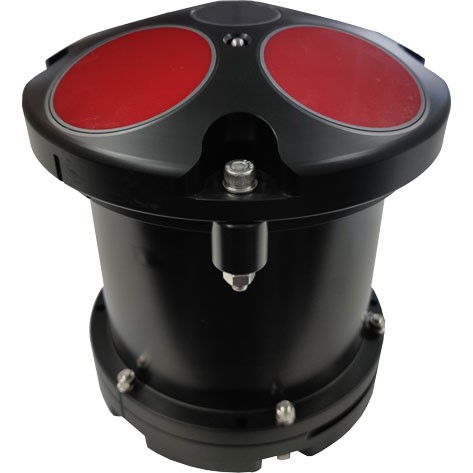
Five-beam RIV-F ADCP Acoustic Doppler Current Profiler | Flow Velocity & Current Measurement,
,
RIV-F5 Series Five-beam ADCP
Frankstar RIV-F5 Series is the newly launched five-beam Acoustic Doppler Current Profiler. The system delivers real-time, accurate and reliable data including current velocity, flow discharge, water level and water temperature. Widely deployed for flood early warning systems, water diversion projects, aquatic environmental monitoring, smart agriculture and intelligent water conservancy management. Equipped with a five-beam transducer integrated with an independent central sounding beam reaching up to 160 m, it greatly enhances bottom tracking performance for high-sediment waters, ensuring more accurate and stable sampling results.
Even under complex hydrological environments featuring high turbidity and rapid flow velocity, the RIV-F5 ADCP maintains outstanding measurement performance, reaching the technical level of top international counterparts. It serves as a premium, cost-effective five-beam ADCP solution for high-performance current profiling tasks.
Key Features
Military-Grade Acoustic Technology & Stable Quality
Adopts mature high-grade acoustic technology with strict quality control to support long-term continuous field observation.
5-Beam Design with Independent Central Sounding Beam
Built-in 160 m central sounding beam, optimized for high-sediment turbid waters and improves bottom tracking stability significantly.
Rugged Internal Structure & Low Maintenance
Solid mechanical framework reduces on-site maintenance workload for long-term underwater deployment.
Remote Data Upload Function
Supports automatic uploading of measured data to designated web servers for remote monitoring platform integration.
Excellent Cost Performance
Comparable core functions and specifications with mainstream international ADCP products at a more competitive price.
Professional Technical Support
Supported by experienced oceanographic technicians, providing fast response and comprehensive technical assistance during measurement campaigns.
Technical Specifications
|
Item |
RIV-300 |
RIV-600 |
RIV-1200 |
|
Current Profiling |
|||
|
Frequency |
300kHz |
600kHz |
1200kHz |
|
Profiling Range |
1~120 m |
0.4~80 m |
0.1~35 m |
|
Velocity Range |
±20 m/s |
±20 m/s |
±20 m/s |
|
Accuracy |
±0.3% ±3 mm/s |
±0.25% ±2 mm/s |
±0.25% ±2 mm/s |
|
Resolution |
1 mm/s |
1 mm/s |
1 mm/s |
|
Layer Size |
1~8 m |
0.2~4 m |
0.1~2 m |
|
Number of Layers |
1~260 |
1~260 |
1~260 |
|
Update Rate |
1 Hz |
1 Hz |
1 Hz |
|
Bottom Tracking |
|||
|
Central Sounding Frequency |
400kHz |
400kHz |
400kHz |
|
Tilted Beam Depth Range |
2~240 m |
0.8~120 m |
0.5–55 m |
|
Vertical Beam Depth Range |
160 m |
160 m |
160 m |
|
Accuracy |
±0.3% ±3 mm/s |
±0.25% ±2 mm/s |
±0.25% ±2 mm/s |
|
Velocity Range |
±20 m/s |
±20 m/s |
±20 m/s |
|
Update Rate |
1 Hz |
1 Hz |
1 Hz |
|
Transducer & Hardware |
|||
|
Type |
Piston |
Piston |
Piston |
|
Mode |
Broadband |
Broadband |
Broadband |
|
Configuration |
5 beams (central sounding beam) |
5 beams (central sounding beam) |
5 beams (central sounding beam) |
|
Built-in Sensors |
|||
|
Temperature |
Range: -10°C ~ 85°C; Accuracy: ±0.5°C; Resolution: 0.01°C |
||
|
Tilt Motion |
Range: ±50°; Accuracy: ±0.2°; Resolution: 0.01° |
||
|
Heading |
Range: 0~360°; Accuracy: ±0.5°(calibrated); Resolution: 0.1° |
||
|
Power & Communication |
|||
|
Power Consumption |
≤3 W |
||
|
DC Input |
10.5 V ~ 36 V |
||
|
Communication Interface |
RS422, RS232 or 10M Ethernet |
||
|
Storage |
Standard 2G, customizable capacity supported |
||
|
Mechanical & Environmental |
|||
|
Housing Material |
POM (standard), titanium alloy or aluminum alloy optional according to depth rating |
||
|
Dimension |
245 mm (H) × Φ225 mm |
||
|
Weight |
7.5 kg in air, 5 kg in water (standard version) |
||
|
Maximum Depth Rating |
400 m / 1500 m / 3000 m / 6000 m optional |
||
|
Operating Temperature |
-5 °C ~ 45 °C |
||
|
Storage Temperature |
-30 °C ~ 60 °C |
||
|
Supporting Software |
IOA river current measurement software with data acquisition and navigation modules |
||
Application Scenarios
Frankstar RIV-F5 five-beam ADCP is widely used for river hydrological monitoring, flood early warning, water transfer project monitoring, estuarine tidal current observation, offshore engineering surveys and aquatic environment research. The built-in central sounding beam makes it the preferred profiling instrument for high-sediment rivers and turbid coastal waters. It can be deployed on stationary platforms, survey vessels and ocean observation buoys for long-term continuous current profile acquisition.
Note: All above technical parameters can be customized according to project requirements.
Accurate measurement of water flow velocity is fundamental to hydrological monitoring, river research, coastal observation, and oceanographic studies.
Water currents are continuously changing with water depth, flow conditions, tides, wind, and local hydrodynamic environments. Traditional point-current meters measure velocity at a specific location, while an Acoustic Doppler Current Profiler (ADCP) can measure water movement across multiple depths, providing a more comprehensive view of the water column.
The FrankStar Five-beam RIV-F ADCP Acoustic Doppler Current Profiler is designed for measuring water flow velocity and current profiles. The system uses multiple acoustic beams to obtain velocity information at different positions and depths.
The RIV-F series is available in 300KHz, 600KHz, and 1200KHz configurations, allowing users to select an appropriate frequency according to their monitoring environment and application requirements.
What Is a Five-beam RIV-F ADCP?
An ADCP, or Acoustic Doppler Current Profiler, is an acoustic instrument used to measure the velocity of moving water.
Instead of physically measuring water movement with a mechanical propeller or rotor, an ADCP transmits acoustic signals into the water and analyzes the Doppler shift of signals scattered back by particles suspended in the water.
The measured Doppler information can then be used to determine water velocity.
The Five-beam RIV-F ADCP uses a multi-beam acoustic configuration to obtain current information from the surrounding water column.
This makes it suitable for applications where users need more than a single-point velocity measurement.
How Does an ADCP Measure Water Flow?
The operating principle of an ADCP is based on the Doppler effect.
Step 1: Acoustic Transmission
The ADCP transmits acoustic pulses into the water through its transducers.
Step 2: Acoustic Scattering
The transmitted acoustic signals interact with small particles suspended in the water.
These particles generally move with the surrounding water.
Step 3: Doppler Shift Detection
When the reflected acoustic signal returns to the instrument, its frequency has changed relative to the transmitted signal.
This frequency difference is known as the Doppler shift.
Step 4: Velocity Calculation
The system analyzes the Doppler shift to determine the velocity component along the acoustic beam.
Step 5: Multi-beam Processing
Measurements from multiple acoustic beams are combined to calculate water-current velocity and direction.
Step 6: Current Profiling
Measurements from different depth cells can be used to generate a velocity profile through the water column.
The result is a detailed representation of how water velocity changes with depth.
Why Use a Five-beam ADCP?
A multi-beam configuration provides several advantages for water-current measurement.
Multi-directional Velocity Measurement
Multiple acoustic beams allow the system to observe water movement from different directions.
This provides the information needed to calculate current velocity components rather than relying on a single acoustic measurement.
Water-Column Profiling
Instead of measuring velocity at only one point, an ADCP can divide the water column into measurement cells.
This allows users to examine how flow velocity varies with depth.
Current Direction and Velocity
ADCP measurements can be used to characterize both:
Water flow velocity
Current direction
These parameters are important for understanding river discharge, tidal circulation, coastal currents, and other hydrodynamic processes.
RIV-F ADCP Frequency Options
The FrankStar Five-beam RIV-F ADCP is available in three frequency configurations:
300KHz ADCP
The 300KHz configuration is designed for applications where greater profiling capability is required.
It can be considered for appropriate river, coastal, and marine current-monitoring environments depending on water conditions and project requirements.
600KHz ADCP
The 600KHz configuration provides a balance between acoustic frequency and profiling requirements.
It can be considered for a wide range of hydrological and marine current-monitoring applications.
1200KHz ADCP
The 1200KHz configuration is suitable for applications requiring higher-frequency acoustic measurement, particularly in relatively shallower water environments.
The appropriate frequency should be selected according to water depth, suspended sediment conditions, required profiling range, and the project’s measurement objectives.
What Can the RIV-F ADCP Measure?
The primary purpose of the Five-beam RIV-F ADCP is water-current measurement.
Depending on configuration and deployment method, the system can provide information including:
Flow Velocity
Measure water movement at different positions within the water column.
Current Direction
Determine the direction of water movement from the measured velocity components.
Velocity Profile
Generate a profile showing how water velocity changes with depth.
Water-Flow Distribution
Analyze differences in flow conditions across the measured water column.
Hydrodynamic Changes
Continuous or repeated measurements can be used to investigate changes caused by:
Tides
Rainfall
Flood events
Seasonal changes
Wind
Water-level variations
Other hydrological processes
Applications of the Five-beam RIV-F ADCP
River Flow Monitoring
ADCPs are widely used for measuring river flow velocity and understanding river hydrodynamics.
Typical applications include:
River discharge surveys
Flow velocity monitoring
Flood monitoring
Hydrological research
River cross-section surveys
Water-resource management
By measuring velocity at multiple locations and depths, an ADCP can provide information needed for analyzing the overall flow structure.
Hydrological Monitoring
The RIV-F ADCP can be used in hydrological monitoring projects where understanding water movement is essential.
Applications may include:
Rivers
Streams
Channels
Reservoirs
Lakes
Irrigation systems
Water-management infrastructure
Coastal Current Monitoring
Coastal waters are affected by tides, wind, river discharge, bathymetry, and other hydrodynamic factors.
ADCP measurements can help researchers investigate:
Tidal currents
Coastal circulation
Estuarine flow
Nearshore hydrodynamics
Current variability
Oceanographic Research
The RIV-F ADCP can also support oceanographic field research requiring water-current measurements.
Researchers can combine ADCP data with observations from:
CTD systems
Wave sensors
Buoys
Water-quality sensors
Meteorological stations
Other oceanographic instruments
This creates a more comprehensive marine observation dataset.