360 Degree Rotation Mini Electric Winch | Marine Equipment Deployment System
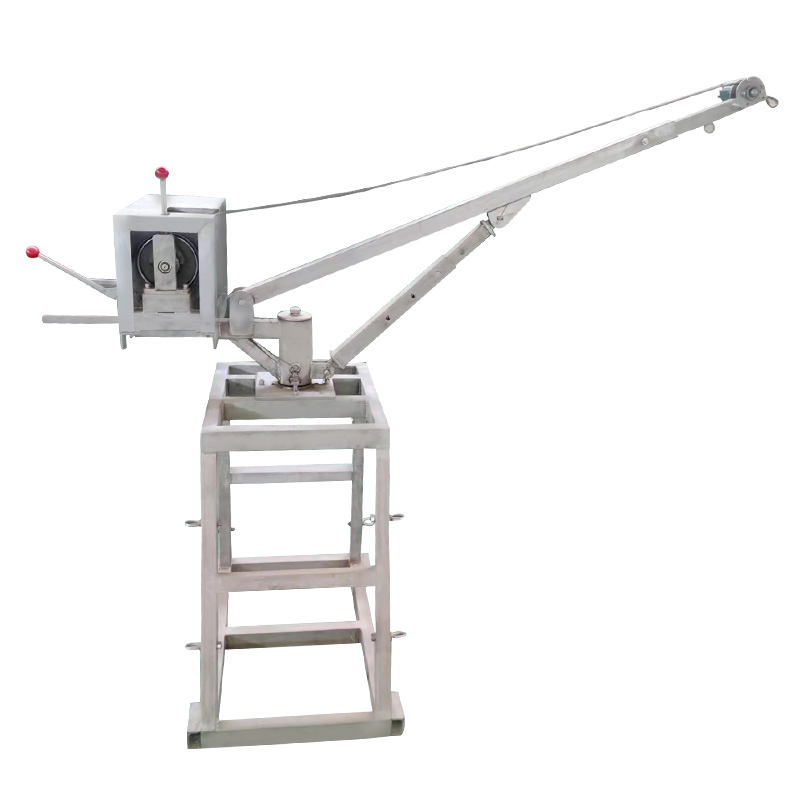

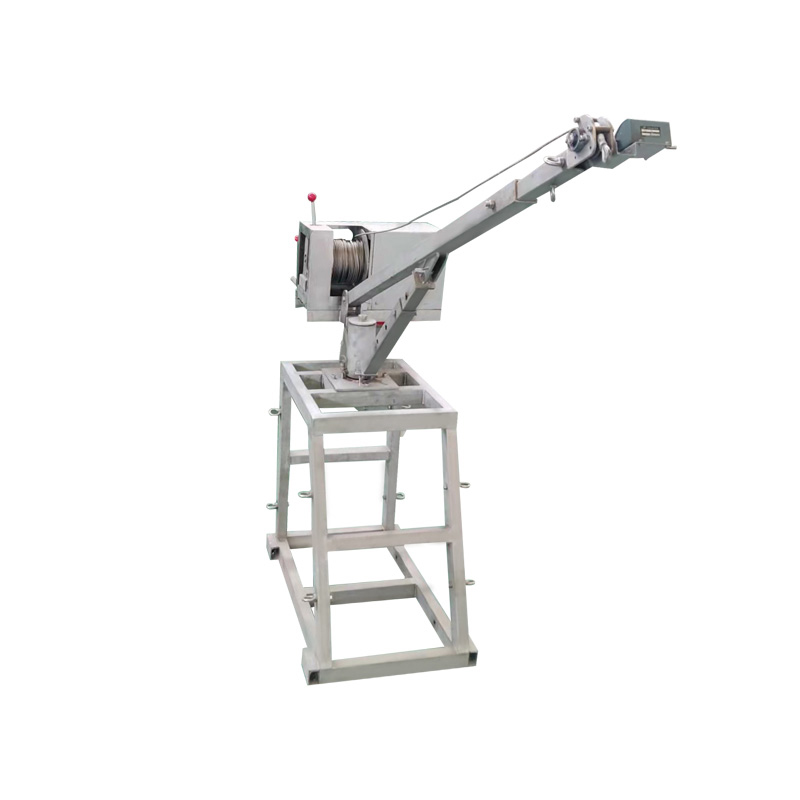
360 Degree Rotation Mini Electric Winch | Marine Equipment Deployment System,
,
Frankstar 360 Degree Rotation Mini Electric Winch is a compact marine electric hoist developed for deploying and recovering underwater sensors, water quality sondes and sampling equipment. The lifting arm enables full 360° rotation for flexible positioning during shipboard and shore-side monitoring operations.
Power-driven operation reduces manual labor during repeated sampling tasks. Constructed with anti-corrosion materials, this electric winch matches φ6mm stainless steel wire rope with a maximum length of 100m. It delivers stable load control for ocean surveys, environmental monitoring and aquaculture field missions.
Technical Specifications
| Net Weight | 100 kg |
| Rated Working Load | 100 kg |
| Lifting Arm Telescopic Range | 1000 ~ 1500 mm |
| Supporting Wire Rope | φ6 mm, length: 100 m |
| Lifting Arm Rotation Range | 360° |
Key Features
Powered by a 220V AC motor, this winch is fitted with a motor holding brake, gear reducer, manual clutch and manual friction brake. Multiple mounting options are supported, and the lifting arm achieves full 360° rotation.
Neutral gear mode enables free lowering of loads, while the integrated band brake precisely controls descending speed during free payout. It is matched with 316 stainless steel non-rotating wire rope. A built-in cable counter provides accurate measurement of deployed cable length.
Standard configuration includes 220V AC drive unit, motor holding brake, reducer, manual clutch, manual friction brake, rotating boom and mounting fixtures. For cable payout, disengage the clutch and adjust descent speed via the band brake. To re-engage the clutch, operate the clutch lever while rotating the drum, or activate the motor to drive the clutch sleeve into rotation.
Once hoisting is completed, the motor holding brake engages automatically after power cut for secure braking. Upon finishing unwinding, engage the clutch to lock the drum before releasing the manual brake.
Advantages
- The 360° rotatable lifting arm simplifies deck hoisting operations, reduces workload and improves operator safety.
- Free-fall function for carried instruments effectively shortens deployment time.
- User-friendly band brake delivers reliable speed control, boosting operational efficiency and personnel safety.
- Heavy-duty stainless steel wire rope guarantees equipment safety during operation, extends service life and lowers long-term operating costs.
- The cable counter displays rope length in real time during payout and retrieval for higher operational accuracy and efficiency.
Deploying and recovering marine instruments safely and efficiently is an essential part of oceanographic and hydrological fieldwork.
Equipment such as CTD profilers, water-quality sensors, sampling instruments, underwater monitoring devices, and other marine instruments often needs to be lowered from a vessel and recovered repeatedly during field operations. A suitable winch can make these operations more controlled while reducing manual handling.
The FrankStar 360 Degree Rotation Mini Electric Winch is a compact marine equipment deployment system designed for oceanographic and marine field applications. Its 360-degree rotation capability provides greater flexibility when positioning and handling underwater instruments around a working area.
With an electric drive system, telescopic arm, cable handling mechanism, and marine-oriented construction, the winch can be integrated into a variety of vessel-based and field observation operations.
What Is a 360 Degree Rotation Mini Electric Winch?
A 360 Degree Rotation Mini Electric Winch is a compact powered winching system designed to deploy, retrieve, and handle marine equipment.
Unlike a conventional fixed winch, the rotating structure allows the operator to change the working direction of the arm around the winch installation point.
This can be useful when the equipment needs to be:
Lowered over the side of a vessel
Retrieved back onto the vessel
Moved between working positions
Positioned around a sampling or observation area
Used with different deployment locations
The system is particularly suitable for marine research vessels, survey vessels, environmental monitoring operations, and other field platforms where equipment handling flexibility is important.
Key Features of the FrankStar Mini Electric Winch
360° Rotation
The most distinctive feature is the 360-degree rotation capability.
The rotating mechanism allows the deployment arm to change its working direction, providing greater operational flexibility compared with a fixed-position winch.
This can be particularly useful on vessels with limited deck space or where instruments need to be deployed from different sides or working positions.
Compact Marine Deployment Design
The Mini Electric Winch is designed for marine equipment handling while maintaining a relatively compact configuration.
It can be considered for applications where a full-size heavy-duty oceanographic winch is unnecessary but reliable powered deployment is still required.
Working Load up to 100 kg
The winch is designed with a working load of up to 100 kg, depending on the application and configuration.
This provides sufficient capacity for many types of marine observation and sampling equipment.
Potential equipment includes:
CTD instruments
Water-quality sensors
Oceanographic probes
Sampling equipment
Underwater monitoring instruments
Small deployment frames
Other marine sensors and equipment
The actual working configuration should always be selected according to the equipment weight, cable length, deployment depth, vessel conditions, and operational requirements.
Telescopic Deployment Arm
The winch can be equipped with a telescopic arm, providing additional flexibility when positioning equipment over the side of a vessel.
The arm can be adjusted according to the required operating position, helping operators manage the distance between the winch and the deployment point.
This is particularly useful for vessel-based marine surveys where the instrument needs to be positioned safely away from the hull.
Marine-Grade Cable and Equipment Handling
The winch uses a marine-oriented cable handling system designed for repeated deployment and recovery operations.
The system can be configured with a 316 stainless steel non-rotating wire rope, helping provide suitable mechanical performance for marine equipment handling.
A cable counter can also be used to monitor cable deployment, providing operators with useful information during underwater instrument operations.
Motor Holding Brake and Gear Reduction
Controlled equipment deployment requires more than simply lifting or lowering a load.
The Mini Electric Winch incorporates a motor holding brake and gear reducer to support controlled winching operations.
The braking mechanism helps maintain the load when the motor is stopped, while the gear reduction system provides the mechanical transmission required for lifting and lowering equipment.
These features are particularly important when handling underwater instruments from a moving vessel or when precise equipment positioning is required.
Manual Clutch and Band Brake
In addition to its powered operating system, the winch incorporates a manual clutch and band brake.
These mechanisms provide additional control during equipment handling and can be useful during setup, deployment, recovery, and maintenance operations.
The combination of powered and manual mechanisms gives operators greater flexibility when managing the winch in different field conditions.
How Does a Marine Electric Winch Work?
The basic operating process is straightforward.
Step 1: Install the Winch
The winch is mounted on a suitable vessel deck, working platform, or other supporting structure.
Step 2: Connect the Equipment
The underwater instrument or deployment frame is connected to the winch wire rope.
Step 3: Position the Arm
The rotating mechanism and telescopic arm can be adjusted to position the deployment point appropriately.
Step 4: Lower the Equipment
The electric drive system controls the wire rope as the equipment is lowered into the water.
Step 5: Monitor Deployment
The operator can monitor the cable deployment and equipment position during the operation.
Step 6: Recover the Equipment
After data collection or sampling is complete, the winch retrieves the equipment and brings it back toward the vessel.
This workflow can significantly simplify repeated deployment and recovery operations during marine field surveys.
Applications of the 360 Degree Rotation Mini Electric Winch
CTD Deployment
CTD instruments are commonly deployed from research vessels to measure parameters such as:
Conductivity
Temperature
Depth
Salinity
A powered winch can make repeated CTD deployment and recovery more efficient, especially during multi-station surveys.
Water-Quality Monitoring
Water-quality instruments may need to be deployed at different depths or sampling locations.
The winch can support deployment of equipment used for measurements such as:
Dissolved oxygen
pH
Turbidity
Conductivity
Temperature
Other water-quality parameters
The appropriate deployment method depends on the sensor package and survey requirements.
Oceanographic Research
Marine research projects frequently require underwater instruments to be deployed and recovered multiple times.
The Mini Electric Winch can support field operations involving:
Oceanographic sensors
Sampling instruments
CTD systems
Current measurement equipment
Water-quality monitoring systems
Underwater observation equipment
Environmental Monitoring
Environmental monitoring programs may require repeated measurements at different locations and depths.
A compact electric winch can help improve the efficiency of these operations while reducing manual lifting and lowering.
Hydrographic and Survey Operations
The winch can also be considered for equipment handling during hydrographic and marine survey activities where underwater instruments need to be repeatedly deployed and recovered.
Buoy and Mooring Operations
The winch can support certain buoy and mooring-related field operations where the equipment weight and deployment requirements fall within the system’s working capacity.
For larger or deeper mooring systems, a dedicated heavy-duty winch should be evaluated instead.