Drifting & Mooring Mini Wave Elf 2.0 Data Buoy | Wave & Surface Current Monitoring


Drifting & Mooring Mini Wave Elf 2.0 Data Buoy | Wave & Surface Current Monitoring,
,
1. Product Advantages
-
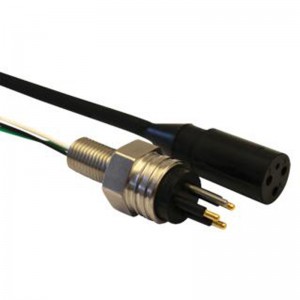
Sub-Surface Profiling Capability: Designed with an enhanced structural hull supporting multi-sensor profiling arrays for deep water CTD, temperature chains, and acoustic sensors.
-
Dual Deployment Flexibility: Operates seamlessly in both free-drifting ocean profiling and fixed-station mooring modes.
-
High Sensor Expandability: Allows integration of additional customized sensors for vertical profiling data monitoring based on specific project needs.
-
Multi-Channel Real-Time Telemetry: Equipped with real-time data transmission via Satellite (Iridium/BDS), GSM/Cellular, and HF radio communications.
-
High Precision & Low Power: Powered by advanced multi-channel acquisition technology and low-power management for long-term field stability.
2. Production Process
-
Enhanced Hull Molding: Precision-molded using high-strength marine polymers and corrosion-resistant alloys engineered for deep-water hydrostatic pressure and UV resistance.
-
Electronics & Profiling Board Assembly: Assembly of multi-layer PCBs, low-power industrial microprocessors, multi-channel data acquisition units, and profiling cable interfaces.
-
Sealing & Waterproofing: IP68 hermetic potting, double-O-ring seals, and helium leak testing on all penetrations and sensor cable connectors.
-
Sensor Integration & Calibration: Precision multi-parameter calibration of wave sensors, CTD units, and profiling modules against oceanographic standards.
3. Quality Inspection
-
Hydrostatic Pressure Testing: Chamber pressure testing simulating depths up to 500+ meters for submerged housing and profile modules.
-
Communication & GPS Verification: Telemetry burn-in testing across Satellite, GSM, and HF frequency links to guarantee unbroken data transmission.
-
Thermal & Environmental Testing: Operational testing under temperature extremes (-20°C to +60°C) and severe sea state vibrations.
-
30-Day Pre-Deployment Burn-In: Comprehensive functional test verifying continuous data logging, power management efficiency, and profiling accuracy.
4. Product Parameters & Monitored Data
| Parameter Category | Monitored Parameters PDF |
| Oceanographic |
• Wave Height
• Wave Period
• Wave Direction
• Wave Spectrum
• Current Speed
• Current Direction |
| Environmental & Profiling |
• Water Temperature
• Salinity / Conductivity |
| Meteorological |
• Wind Speed
• Wind Direction
• Air Temperature
• Humidity
• Barometric Pressure |
| Additional Options |
• Nuclear Radiation
• Underwater Acoustic
• Hydrocarbon Sensing |
Note: More sensors can be added on Wave Elf (Standard) 2.0 for profiling data monitoring based on needs.
5. Product Model
-
Model Name: Wave Elf (Standard) 2.0 / Wave Elf Mini 2.0
-
Deployment Type: Drifting, Mooring & Sub-surface Profiling
6. Packaging & Transportation
-
Packaging: Heavy-duty, shock-resistant customized wooden crates or flight cases lined with high-density die-cut EVA protective foam to safeguard profiling cables, sensors, and hull components during transit.
-
Transportation & Logistics: Air freight, sea container, or land transport compliant with UN38.3 standards for hazardous goods certification on internal lithium battery packs.
7. Product Purpose
The primary purpose of the Wave Elf 2.0 is to deliver continuous, high-precision oceanographic and sub-surface profiling observations across deep-water and coastal environments, supporting long-term scientific research, environmental safety, and offshore engineering.
8. Product Applications
-
Scientific Research & Drifting Ocean Observation
-
Directional Wave & Current Measurement
-
Offshore Design, Operations & Deep Water Monitoring
-
Coastal Engineering & Offshore Infrastructure Monitoring
-
Marine & Freshwater Environmental Monitoring
-
Offshore Renewable Energy & Wave Energy Studies
-
Oil & Gas Environmental Monitoring
-
Marine Meteorology & Weather Forecasting Studies
Reliable observation of ocean waves and surface currents is essential for oceanographic research, coastal engineering, marine environmental monitoring, offshore operations, and weather-related studies.
Traditional fixed monitoring systems provide valuable long-term observations at specific locations, while drifting platforms can capture the spatial variability of ocean conditions. A flexible observation platform that can operate in both drifting and mooring modes provides researchers and marine monitoring organizations with greater deployment flexibility.
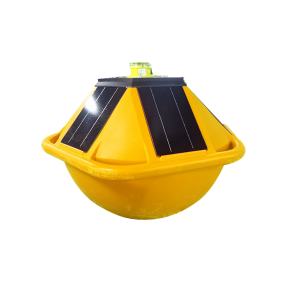
The FrankStar Mini Wave Elf 2.0 Data Buoy is a compact marine observation platform designed for wave and surface current monitoring. Its flexible deployment concept allows the buoy to be used for either drifting observations or fixed mooring applications, depending on the monitoring objective.
What Is the Mini Wave Elf 2.0 Data Buoy?
The Mini Wave Elf 2.0 Data Buoy is a compact ocean observation buoy designed to collect marine environmental data while deployed on the water surface.
Unlike a conventional fixed wave buoy that is limited to a single observation location, a drifting configuration allows the buoy to move with the surrounding water, providing observations along its trajectory.
The buoy can therefore be considered for two major deployment modes:
Drifting deployment for spatial observations
Mooring deployment for fixed-point monitoring
This makes the Mini Wave Elf 2.0 suitable for projects where researchers need to investigate both temporal changes at a location and spatial variations across a marine area.
Drifting and Mooring Deployment Modes
1. Drifting Wave Monitoring
In drifting mode, the buoy follows the movement of the surrounding water.
This deployment approach can help researchers observe how wave and surface-current conditions vary across different locations.
Typical applications include:
Oceanographic surveys
Surface-current studies
Coastal circulation research
Marine environmental monitoring
Ocean model validation
Short-term field campaigns
Spatial wave observations
Drifting observation experiments
A drifting buoy can provide a trajectory-based dataset rather than measurements from only one fixed point.
Why Use a Drifting Buoy?
Ocean conditions can change significantly over relatively short distances. A fixed station may provide excellent time-series data but cannot directly describe spatial variation.
A drifting platform can travel through different water masses and provide observations along its movement path.
When combined with accurate positioning data, the resulting dataset can help researchers analyze the relationship between:
Position → Time → Wave Conditions → Surface Current
2. Mooring Wave Monitoring
In mooring mode, the Mini Wave Elf 2.0 can be deployed at a designated observation location.
This configuration is suitable for applications requiring repeated observations from a relatively fixed position.
Typical applications include:
Coastal wave monitoring
Harbor and port observation
Offshore environmental monitoring
Marine construction monitoring
Long-term ocean observation
Wave-condition assessment
Coastal engineering studies
A moored buoy can continuously observe changing wave conditions over time, helping users understand daily, seasonal, and event-related variations.
What Can the Mini Wave Elf 2.0 Monitor?
The Mini Wave Elf 2.0 is designed primarily for marine wave and surface-current observation.
Depending on the specific configuration, monitoring parameters may include:
Wave Parameters
Wave observations can provide important information such as:
Significant wave height
Wave period
Wave direction
Wave characteristics over time
Wave statistics for marine engineering and oceanographic analysis
Wave data can be used to understand sea-state conditions and support operational and research decisions.
Surface Current Parameters
Surface-current observations provide information about the movement of seawater near the surface.
Current-related observations can help researchers study:
Current velocity
Current direction
Surface circulation
Spatial current variability
Coastal circulation patterns
Water-mass movement
The exact measurement parameters depend on the selected instrument configuration and deployment requirements.
Why Monitor Waves and Surface Currents Together?
Wave and current conditions are closely related to marine dynamics.
Monitoring them together provides a more comprehensive understanding of the marine environment.
For example:
Wave observations can describe the state of the sea surface, while surface-current observations describe the movement of water.
Combining these datasets can support:
Oceanographic research
Coastal circulation studies
Marine environmental assessment
Offshore engineering
Ocean model validation
Marine operational planning
Wave-current interaction studies
For research organizations, combining wave and current observations can provide a more complete picture than monitoring either parameter independently.
Key Advantages of a Drifting & Mooring Data Buoy
Flexible Deployment
The same observation platform can be considered for different deployment strategies.
Users can select:
Drifting Mode → spatial observations
Mooring Mode → fixed-location time-series observations
This flexibility is particularly useful for research institutions and marine monitoring organizations conducting different types of field campaigns.
Compact Observation Platform
The Mini Wave Elf 2.0 is designed as a compact wave observation buoy, making it suitable for marine observation projects where deployment flexibility and equipment size are important considerations.
Wave Monitoring
The buoy is designed for ocean wave observation and can provide wave data for scientific and engineering applications.
Surface Current Observation
Surface-current information can help users investigate marine circulation and water movement.
Multi-Application Design
The buoy can support different marine observation scenarios, from temporary field surveys to fixed-point monitoring.