Oil Spill Detection Monitoring Buoy | Real-Time Oil Pollution Tracker


Oil Spill Detection Monitoring Buoy | Real-Time Oil Pollution Tracker,
drifting oil spill tracker, fixed mooring oil monitoring, hydrocarbon sensor buoy, marine environmental observation buoy, marine oil spill early warning system, offshore oil leak monitoring, oil leak telemetry buoy, Oil pollution tracker, Oil spill detection buoy, oil spill detection for offshore platforms, oil spill response equipment, port oil monitoring buoy, real-time oil spill surveillance, satellite oil spill alert,
1. Product Advantages
-
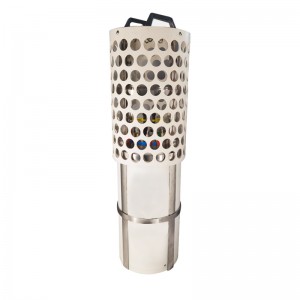
Specialized Hydrocarbon & Environmental Sensing: Integrated with high-sensitivity optical hydrocarbon sensors specifically engineered for real-time oil spill detection and leak monitoring.
-
Dual Deployment Capability: Operates seamlessly in both free-drifting tracking modes and fixed station mooring configurations.
-
Multi-Channel Real-Time Telemetry: Ensures unbroken real-time data transmission and immediate alarm alerts via Satellite (Iridium/BDS), GSM/Cellular, and HF radio links.
-
Multi-Parameter Observation: Simultaneously collects meteorological, oceanographic, and water quality data alongside oil spill detection to model slick drift and diffusion.
-
High Reliability & Low Power: Powered by efficient multi-channel data acquisition technology and long-term energy management for continuous field operation.
2. Production Process
-
Marine-Grade Hull Fabrication: Precision-molded using high-durability, corrosion-resistant marine polymers and alloys engineered to withstand severe ocean conditions and oil/chemical exposure.
-
Sensor & Payload Assembly: Integration of high-precision optical hydrocarbon detectors, wave sensors, acquisition boards, and multi-channel communication modules.
-
Sealing & Waterproofing: IP68 hermetic potting, double-O-ring seals, and helium leak testing on all cable penetrators and electronic compartments.
-
Calibration & Bench Testing: Rigorous calibration of hydrocarbon and oceanographic sensors against environmental and oceanographic standards prior to final assembly.
3. Quality Inspection
-
Hydrostatic Pressure & Waterproofing Test: Chamber pressure testing to verify complete hull and submerged sensor seal integrity under simulated ocean depths.
-
Detection & Sensor Verification: Precision testing of hydrocarbon detection threshold and multi-parameter acquisition accuracy.
-
Telemetry & GPS Burn-In: Transmission reliability testing across Satellite, GSM, and HF frequency links to guarantee unbroken real-time alert delivery.
-
Pre-Shipment Operational Burn-In: 72-hour continuous functional testing for power efficiency, sensor stability, and data logging.
4. Product Parameters & Monitored Data
| Parameter Category | Monitored Parameters PDF |
| Specialized & Environmental |
• Hydrocarbon Sensing / Oil Leak Detection • Water Temperature • Salinity / Conductivity |
| Oceanographic |
• Wave Height • Wave Period • Wave Direction • Wave Spectrum • Current Speed • Current Direction |
| Meteorological |
• Wind Speed • Wind Direction • Air Temperature • Humidity • Barometric Pressure |
| Additional Options |
• Underwater Acoustic • Nuclear Radiation |
5. Product Model
-
Model Name: Oil Spill Detection Monitoring Buoy (Oil & Gas Series)
-
Deployment Type: Drifting & Mooring Compatible
6. Packaging & Transportation
-
Packaging: Heavy-duty, shock-resistant customized wooden crate (or protective flight case) with custom die-cut EVA foam inserts to protect sensitive optical hydrocarbon sensors and hull structure during transit.
-
Transportation & Logistics: Shipped via air freight, sea container, or land transport, complete with UN38.3 lithium battery transport certification for international safety compliance.
7. Product Purpose
The primary purpose of the Oil Spill Detection Monitoring Buoy is to provide continuous, automated surveillance for early oil slick detection, hydrocarbon leak tracking, and marine pollution monitoring, enabling rapid emergency response to protect marine ecosystems and coastal assets.
8. Product Applications
-
Oil & Gas Environmental Monitoring & Leak Detection
-
Marine & Freshwater Environmental Monitoring
-
Offshore Design, Operations & Deep Water Monitoring
-
Port & Maritime Traffic Monitoring & Safety Control
-
Coastal Engineering & Offshore Infrastructure Protection
-
Scientific Research & Drifting Ocean Observation
“Data is for reference only; actual conditions shall prevail.”
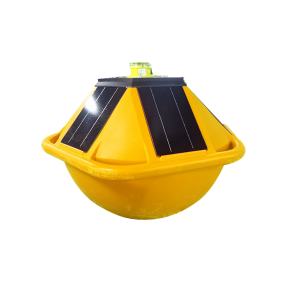
The Oil Spill Detection Monitoring Buoy is a marine environmental observation platform developed by Frankstar to detect, monitor, and track offshore hydrocarbon leaks and oil spill incidents in real time. It is designed for organizations that need continuous, early-warning surveillance across critical maritime zones, ports, and offshore energy infrastructure. Whether deployed as a free-drifting unit or secured in a fixed mooring configuration, this buoy provides operators with reliable situational awareness when oil is present on the water surface.
How the buoy works
The buoy is equipped with high-precision optical and chemical hydrocarbon sensors. These sensors are engineered to identify the presence of oil and related hydrocarbon compounds in the marine environment. When the sensors detect a potential spill or leak, the buoy generates an alert and transmits the information to shore stations or cloud-based monitoring platforms. This real-time alerting capability allows response teams to act quickly, reducing the time between detection and containment.
The buoy supports both free-drifting and fixed mooring modes. In free-drifting mode, it can follow a slick as it moves with currents and wind, helping responders understand the trajectory and spread of the oil. In fixed mooring mode, it can be stationed at a specific location, such as near a port entrance, pipeline, or offshore platform, to provide permanent monitoring of a high-risk area.
Telemetry and communication
Data from the buoy is transmitted through satellite, cellular, or radio communication networks. This flexibility ensures that operators can maintain a reliable data link regardless of where the buoy is deployed. Coastal sites may rely on cellular networks, while deep-water or remote locations can use satellite links. Radio communication offers an additional option for localized operations. The buoy captures high-fidelity environmental data, which can be integrated into existing monitoring dashboards or decision-support systems.
Applications and buyer value
Frankstar designed this oil spill detection buoy for a wide range of maritime stakeholders. Port authorities can deploy it to monitor harbor waters and shipping lanes, where accidental discharges can happen during refueling, loading, or vessel operations. Offshore energy operators can position buoys around platforms, subsea infrastructure, and pipeline corridors to provide early detection of leaks before they become major incidents. Environmental monitoring agencies and research institutions can use the buoy as a baseline tool for water quality surveillance and for tracking the movement of spills during real-world events.
The main value of the buoy is its ability to provide early warning. Oil spills, if undetected, can spread rapidly and cause severe damage to marine ecosystems, coastal economies, and public health. A monitoring buoy that delivers immediate alerts enables faster mobilization of containment booms, skimmers, and other response equipment. This proactive approach can significantly reduce the environmental footprint of a spill and lower the total cost of cleanup operations.
The buoy also offers operational flexibility. Because it can operate in free-drifting or moored mode, one platform can be used for multiple types of missions. A port authority might keep one buoy moored at a sensitive location, while a research team could deploy another in free-drifting mode to study surface current dynamics in an emergency. This versatility makes the buoy a practical investment for organizations that face varying monitoring needs.
Another key benefit is the ability to transmit data to shore stations or cloud platforms. For large maritime areas, it is not always feasible to have personnel on-site. The buoy acts as an autonomous sentinel, continuously sampling the environment and reporting back. Operational teams can monitor the status of the buoy and the presence of oil remotely, reducing the need for frequent manual patrols and enabling more efficient use of response assets.
In addition to oil detection, the buoy provides general environmental observation capabilities. It records environmental data that can be useful for understanding the conditions under which spills occur. This information can support post-incident analysis, regulatory compliance, and long-term environmental trend assessment. By combining hydrocarbon detection with environmental monitoring, Frankstar has created a tool that serves both immediate spill response and broader ocean observing programs.
Global search relevance
Marine pollution does not respect national boundaries. Spills can occur in international waters, coastal zones, or inland waterways that connect to the sea. As a result, oil detection technologies are needed by a global community of users, from government agencies in the Gulf of Mexico to private operators in the North Sea, from Asian port cities to African offshore fields. The Frankstar oil spill detection monitoring buoy is engineered to be adaptable to different regions and operating conditions. Its range of communication options helps ensure that data can be delivered, whether a user is near a coastal city or far out in the open ocean.
For businesses and organizations searching for a reliable oil pollution tracker, this buoy offers a comprehensive solution. The term “oil pollution tracker” reflects the buoy’s core function: not just to detect oil on a single occasion, but to track the presence and movement of oil over time. In an emergency response situation, having a tracker that can follow a slick is essential. In a chronic monitoring scenario, a tracker that consistently reports baseline conditions is equally valuable.
Why choose Frankstar
Frankstar is an ocean technology company focused on developing practical marine instrumentation. The oil spill detection monitoring buoy is one product in a broader portfolio of marine environmental observation equipment. Frankstar aims to provide robust, field-ready solutions that meet the demands of real-world maritime operations. The company understands that oil spills are unpredictable, and monitoring equipment must be dependable when it matters most.
Customers should consider this buoy if they need to enhance their oil spill preparedness and response capability. It is suitable for deployment in ports, along shipping routes, around drilling operations, and near offshore renewable energy installations. It can also be used in coastal protection programs and marine protected areas where early detection of illegal discharges is important.
The buoy is designed to integrate into existing monitoring networks. It can transmit data to a centralized platform, allowing operators to compare readings from multiple buoys and other sensors. For fleet operators, this means a single dashboard can provide a comprehensive view of oil risk across a wide geographic area.
When evaluating oil spill detection equipment, buyers often look for a balance of sensitivity, reliability, and ease of deployment. The Frankstar buoy addresses these factors through its dual sensing technology, flexible mooring options, and redundant communication paths. It is a practical choice for organizations that are serious about protecting the marine environment and their operational assets from the costly consequences of undetected oil releases.
For more information on specifications, deployment procedures, and pricing, please contact the Frankstar team through the official website. The team is ready to discuss how the oil spill detection monitoring buoy can be configured to meet your specific monitoring objectives.