FrankStar Five-Beam RIV-F ADCP – Acoustic Doppler Current Profiler for Hydrological Monitoring
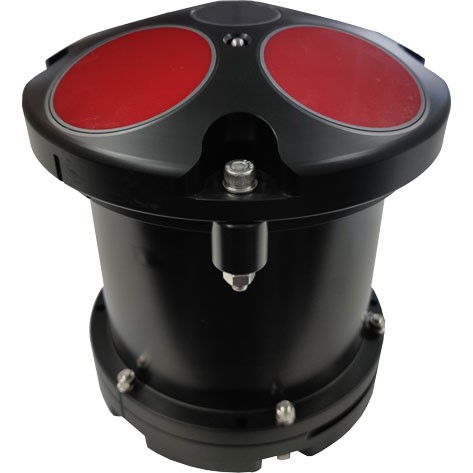
FrankStar Five-Beam RIV-F ADCP – Acoustic Doppler Current Profiler for Hydrological Monitoring,
1200KHz ADCP for hydrological monitoring, 300KHz ADCP current profiler, 600KHz Acoustic Doppler Current Profiler, acoustic Doppler current profiler for water flow measurement, ADCP for river flow velocity measurement, Five-beam RIV-F ADCP for river discharge measurement,
RIV-F5 Series Five-beam ADCP
Frankstar RIV-F5 Series is the newly launched five-beam Acoustic Doppler Current Profiler. The system delivers real-time, accurate and reliable data including current velocity, flow discharge, water level and water temperature. Widely deployed for flood early warning systems, water diversion projects, aquatic environmental monitoring, smart agriculture and intelligent water conservancy management. Equipped with a five-beam transducer integrated with an independent central sounding beam reaching up to 160 m, it greatly enhances bottom tracking performance for high-sediment waters, ensuring more accurate and stable sampling results.
Even under complex hydrological environments featuring high turbidity and rapid flow velocity, the RIV-F5 ADCP maintains outstanding measurement performance, reaching the technical level of top international counterparts. It serves as a premium, cost-effective five-beam ADCP solution for high-performance current profiling tasks.
Key Features
Military-Grade Acoustic Technology & Stable Quality
Adopts mature high-grade acoustic technology with strict quality control to support long-term continuous field observation.
5-Beam Design with Independent Central Sounding Beam
Built-in 160 m central sounding beam, optimized for high-sediment turbid waters and improves bottom tracking stability significantly.
Rugged Internal Structure & Low Maintenance
Solid mechanical framework reduces on-site maintenance workload for long-term underwater deployment.
Remote Data Upload Function
Supports automatic uploading of measured data to designated web servers for remote monitoring platform integration.
Excellent Cost Performance
Comparable core functions and specifications with mainstream international ADCP products at a more competitive price.
Professional Technical Support
Supported by experienced oceanographic technicians, providing fast response and comprehensive technical assistance during measurement campaigns.
Technical Specifications
|
Item |
RIV-300 |
RIV-600 |
RIV-1200 |
|
Current Profiling |
|||
|
Frequency |
300kHz |
600kHz |
1200kHz |
|
Profiling Range |
1~120 m |
0.4~80 m |
0.1~35 m |
|
Velocity Range |
±20 m/s |
±20 m/s |
±20 m/s |
|
Accuracy |
±0.3% ±3 mm/s |
±0.25% ±2 mm/s |
±0.25% ±2 mm/s |
|
Resolution |
1 mm/s |
1 mm/s |
1 mm/s |
|
Layer Size |
1~8 m |
0.2~4 m |
0.1~2 m |
|
Number of Layers |
1~260 |
1~260 |
1~260 |
|
Update Rate |
1 Hz |
1 Hz |
1 Hz |
|
Bottom Tracking |
|||
|
Central Sounding Frequency |
400kHz |
400kHz |
400kHz |
|
Tilted Beam Depth Range |
2~240 m |
0.8~120 m |
0.5–55 m |
|
Vertical Beam Depth Range |
160 m |
160 m |
160 m |
|
Accuracy |
±0.3% ±3 mm/s |
±0.25% ±2 mm/s |
±0.25% ±2 mm/s |
|
Velocity Range |
±20 m/s |
±20 m/s |
±20 m/s |
|
Update Rate |
1 Hz |
1 Hz |
1 Hz |
|
Transducer & Hardware |
|||
|
Type |
Piston |
Piston |
Piston |
|
Mode |
Broadband |
Broadband |
Broadband |
|
Configuration |
5 beams (central sounding beam) |
5 beams (central sounding beam) |
5 beams (central sounding beam) |
|
Built-in Sensors |
|||
|
Temperature |
Range: -10°C ~ 85°C; Accuracy: ±0.5°C; Resolution: 0.01°C |
||
|
Tilt Motion |
Range: ±50°; Accuracy: ±0.2°; Resolution: 0.01° |
||
|
Heading |
Range: 0~360°; Accuracy: ±0.5°(calibrated); Resolution: 0.1° |
||
|
Power & Communication |
|||
|
Power Consumption |
≤3 W |
||
|
DC Input |
10.5 V ~ 36 V |
||
|
Communication Interface |
RS422, RS232 or 10M Ethernet |
||
|
Storage |
Standard 2G, customizable capacity supported |
||
|
Mechanical & Environmental |
|||
|
Housing Material |
POM (standard), titanium alloy or aluminum alloy optional according to depth rating |
||
|
Dimension |
245 mm (H) × Φ225 mm |
||
|
Weight |
7.5 kg in air, 5 kg in water (standard version) |
||
|
Maximum Depth Rating |
400 m / 1500 m / 3000 m / 6000 m optional |
||
|
Operating Temperature |
-5 °C ~ 45 °C |
||
|
Storage Temperature |
-30 °C ~ 60 °C |
||
|
Supporting Software |
IOA river current measurement software with data acquisition and navigation modules |
||
Application Scenarios
Frankstar RIV-F5 five-beam ADCP is widely used for river hydrological monitoring, flood early warning, water transfer project monitoring, estuarine tidal current observation, offshore engineering surveys and aquatic environment research. The built-in central sounding beam makes it the preferred profiling instrument for high-sediment rivers and turbid coastal waters. It can be deployed on stationary platforms, survey vessels and ocean observation buoys for long-term continuous current profile acquisition.
Note: All above technical parameters can be customized according to project requirements.
Accurate measurement of water flow velocity and discharge is essential for modern hydrological monitoring. Rivers, canals, reservoirs, estuaries, and coastal waters all require reliable current measurements to support water-resource management, flood monitoring, environmental assessment, and scientific research.
The FrankStar Five-Beam RIV-F ADCP (Acoustic Doppler Current Profiler) is designed for measuring water flow velocity and profiling current conditions in hydrological applications. Using acoustic Doppler technology, the system provides detailed information about water movement across different measurement cells and depths.
The RIV-F series is available in 300KHz, 600KHz, and 1200KHz configurations, allowing users to select an appropriate frequency according to the measurement environment, required profiling range, and application requirements.
What Is an ADCP?
An Acoustic Doppler Current Profiler (ADCP) is an acoustic instrument used to measure water velocity at multiple points or depth cells throughout the water column.
Unlike traditional mechanical current meters that measure flow velocity at a single point, an ADCP uses sound waves to obtain velocity information over multiple measurement cells. This allows users to build a velocity profile and better understand how water moves through a river, channel, reservoir, or other water body.
ADCP technology is widely used in:
River flow and discharge measurement
Hydrological stations
Flood monitoring
Water-resource management
Canal and channel monitoring
Reservoir management
Coastal and estuarine studies
Oceanographic research
Environmental monitoring
Scientific field surveys
How Does the FrankStar RIV-F ADCP Work?
The RIV-F ADCP uses the Doppler effect to determine water velocity.
The transducers transmit acoustic signals into the water. When these signals interact with suspended particles moving with the water, the reflected signals experience a frequency shift.
The ADCP analyzes this Doppler shift to calculate the velocity of the water.
By dividing the water column into multiple measurement cells, the instrument can generate a velocity profile showing how flow velocity changes with depth.
The basic measurement process can be summarized as:
Acoustic Transmission → Echo Reception → Doppler Shift Analysis → Velocity Calculation → Water Flow Profile
This acoustic measurement principle allows ADCPs to provide significantly more information than conventional single-point current meters.
What Is a Five-Beam ADCP?
The FrankStar RIV-F uses a five-beam acoustic configuration to improve the measurement of water movement across different directions.
The multi-beam configuration enables the instrument to collect velocity information from multiple acoustic paths. This helps create a more comprehensive representation of the flow field and supports more reliable hydrological measurements.
The five-beam design is particularly useful for applications where understanding the spatial distribution of water velocity is important, such as:
River cross-section surveys
Discharge measurements
Channel flow monitoring
Hydrological investigations
Flow-field analysis
Long-term water-resource monitoring
FrankStar RIV-F ADCP Frequency Options
The FrankStar Five-Beam RIV-F ADCP is available in three frequency configurations:
300KHz ADCP
The 300KHz RIV-F ADCP is suitable for applications requiring a relatively longer acoustic measurement range.
Typical applications may include:
Large rivers
Deep channels
Reservoirs
Large-scale hydrological surveys
River discharge measurement
600KHz ADCP
The 600KHz RIV-F ADCP provides a balanced configuration for a wide range of hydrological measurement applications.
It can be considered for:
Medium-sized rivers
Canals
Hydrological stations
River flow surveys
Environmental monitoring
Water-resource assessment
1200KHz ADCP
The 1200KHz RIV-F ADCP is designed for applications where higher-frequency acoustic measurement is appropriate.
Typical applications can include:
Smaller rivers
Shallow-water environments
Channels
Detailed flow surveys
Nearshore and environmental monitoring
The appropriate frequency should be selected according to water depth, expected measurement range, suspended sediment conditions, flow environment, and the specific survey requirements.
What Can an ADCP Measure?
Depending on the configuration and application, an ADCP can provide important information about water movement, including:
1. Water Flow Velocity
The primary function of an ADCP is measuring water flow velocity.
Velocity data can be obtained at multiple locations within the measurement profile rather than at only one point.
2. Velocity Profile
An ADCP can divide the water column into measurement cells and generate a vertical or spatial velocity profile.
This helps users understand how flow velocity varies:
With depth
Across a river section
Between different flow zones
Under changing hydrological conditions
3. Flow Direction
Multi-beam acoustic measurements can provide information about the direction of water movement, supporting analysis of complex flow conditions.
4. River Discharge
By combining water velocity measurements with information about the cross-sectional area of a river or channel, ADCP systems can be used for river discharge measurement.
Discharge information is particularly important for:
Flood forecasting
Water-resource management
Hydrological research
Irrigation management
River basin management
ADCP for River Flow and Discharge Measurement
One of the most important applications of ADCP technology is river discharge measurement.
Traditional discharge measurements can require multiple personnel and repeated point measurements across a river section. An ADCP can collect velocity information across multiple measurement cells, making it possible to obtain a more detailed representation of the flow structure.
A typical ADCP river survey involves:
Selecting an appropriate measurement section
Deploying the ADCP
Measuring water velocity across the river
Recording depth and velocity information
Processing the measured data
Calculating or estimating river discharge
Repeated measurements under different water-level conditions can also support the development and improvement of hydrological monitoring programs.
ADCP for Hydrological Monitoring
Modern hydrological stations increasingly require continuous and high-resolution information about water movement.
An ADCP can be integrated into hydrological monitoring systems to support:
River flow monitoring
Flood event observation
Water-level and discharge studies
Hydrological forecasting
Basin management
Irrigation management
Reservoir operation
Environmental assessment
When combined with water-level sensors, rainfall gauges, meteorological stations, telemetry systems, and data platforms, ADCP measurements can become part of an integrated hydrological monitoring network.
ADCP Applications in Different Water Environments
River Monitoring
ADCPs are widely used to measure flow velocity and discharge in rivers.
Typical applications include:
River discharge surveys
Flood monitoring
Hydrological station measurements
Long-term flow observation
River basin studies
Canal and Channel Monitoring
For irrigation canals, drainage channels, and engineered waterways, ADCP measurements can help evaluate flow distribution and hydraulic conditions.
Reservoir Monitoring
ADCPs can be used to investigate water movement within reservoirs and support water-resource management.
Estuarine and Coastal Monitoring
Depending on the selected frequency and configuration, ADCP technology can also support current measurements in estuarine and coastal environments.
Scientific Research
Researchers can use ADCP velocity profiles to study:
Flow dynamics
Sediment transport
Hydrodynamic processes
Environmental changes
Water circulation