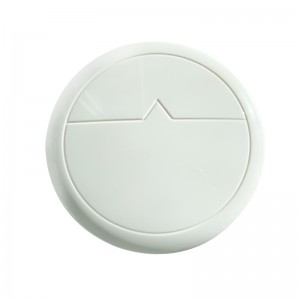
Frankstar RNSS/GNSS Wave Sensor | Real-Time Ocean Wave Monitoring


Frankstar RNSS/GNSS Wave Sensor | Real-Time Ocean Wave Monitoring,
buoy mounted wave sensor, Frankstar wave sensor, gnss wave sensor, marine environmental monitoring sensor, ocean wave monitoring sensor, oceanographic research sensor, offshore platform wave sensor, real time wave monitoring system, RNSS Wave Sensor, USV wave measurement, wave height wave period direction sensor,
GNSS Wave Sensor
Frankstar GNSS Wave Sensor is a new generation device designed for real-time ocean wave monitoring. Leveraging low-power embedded processing and high-precision GNSS positioning technology, it adopts proprietary algorithms to accurately measure wave height, wave period, wave direction and wave spectrum. Built with lightweight marine-grade housing and equipped with standard RS232 communication interface, the sensor supports seamless integration with ocean buoys, unmanned surface vessels (USVs) and various offshore platforms. With integrated positioning and timing modules, this all-in-one GNSS wave sensor is widely applied in marine environmental monitoring, navigational safety management, offshore engineering construction and oceanographic scientific research.
Key Features
High-Precision GNSS Measurement
Delivers superior measurement accuracy through GNSS velocity sensing and self-developed proprietary algorithms, reliable for long-term offshore observation.
Multi-Platform Compatibility
Flexible deployment supports ocean buoys, USVs, seaplanes and multiple types of marine carriers to satisfy diversified survey tasks.
All-in-One Wave Sensor
Wave parameter measurement, GNSS positioning and timing functions are integrated into a single compact device to simplify system configuration.
Universal Mounting & Easy Integration
Designed with 5/8″ standard thread and universal communication protocols, enabling fast field installation and simple system integration.
AI-Powered Directional Wave Spectrum (Optional)
Optional cloud-based AI processing service supports automatic generation of directional wave spectrum data for advanced ocean research.
Technical Specifications
|
Physical Parameters |
|
|
Housing Size |
Φ136 mm*89.5 mm |
|
Weight |
500 g |
|
Power Supply & Consumption |
Supports 9-15V DC (12 V DC Recommended) |
|
Housing Material |
Hard Anodized Aluminum Alloy + ASA Impact-Resistant Modified Resin Material |
|
Sample Interval |
15 min (user selectable) |
|
Sample Frequency |
2 Hz |
|
Communication Protocol |
Standard Protocol (NMEA-0183 protocol customizable) |
|
Communication Standard |
RS232 Serial Communication Interface (RS485 customizable), Baud Rate: 115200 bps |
|
Data Storage |
32G |
|
Sensor Performance |
|
|
Measurement Range |
Wave Height: 0 m-30 m |
|
Accuracy |
Wave Height: < 1 % |
|
Resolution |
Wave Height: 0.01 m |
Application Scenarios
The Frankstar GNSS Wave Sensor is widely adopted for coastal and offshore ocean observation projects. Typical applications include marine environmental monitoring, maritime navigational safety warning, offshore wind farm & marine engineering survey, coastal erosion research and academic oceanographic research. Its integrated positioning and wave measurement capability greatly reduces equipment integration difficulty for buoy systems and unmanned marine platforms.
Advantages of Frankstar GNSS Wave Sensor
Different from traditional inertial wave sensors, this GNSS wave sensor calculates wave parameters via GNSS velocity data without complex inertial calibration. It combines positioning timing and wave monitoring into one unit, saving installation space and system cost. Flexible communication options, local 32G data storage and optional AI spectrum analysis function make it suitable for short-term surveys and long-term autonomous offshore deployments.
The Frankstar RNSS/GNSS Wave Sensor is a next-generation instrument for real-time ocean wave monitoring. Designed for professionals in marine research, offshore operations, and environmental monitoring, this sensor delivers accurate measurements of wave height, wave period, and wave direction through a combination of low-power embedded processing and RNSS positioning technology. Proprietary algorithms process satellite signals to derive reliable wave parameters, making the sensor a versatile and dependable component for oceanographic observation and operational safety.
At the core of the Frankstar RNSS/GNSS Wave Sensor is a robust engineering approach. The device integrates advanced positioning and timing modules directly into the sensor housing. This integration simplifies installation and ensures that each wave measurement is synchronized with precise time and position references. As a result, users obtain consistent and repeatable data, which is essential for long-term monitoring programs, model validation, and operational decision-making.
The sensor is built for field deployment in demanding marine environments. Its lightweight marine-grade housing protects the internal electronics from saltwater, humidity, and physical stress, without adding unnecessary weight or bulk. The standard RS232 interface provides a simple and widely accepted connection method, allowing the sensor to be integrated with existing data acquisition systems, telemetry units, or onboard computers. This plug-and-play approach reduces integration time and lowers the engineering burden for system operators.
One of the key strengths of the Frankstar RNSS/GNSS Wave Sensor is its compatibility with a wide range of platforms. Ocean data buoys are a natural fit, as the compact and lightweight design does not compromise buoy performance. Unmanned surface vessels, or USVs, also benefit from the sensor’s low power consumption and reliable operation, enabling wave measurement during autonomous missions. In addition, offshore platforms and fixed structures can host the sensor to provide continuous wave information for operational planning and safety assessments.
The applications of this wave sensor are extensive and practical. In marine environmental monitoring, the sensor contributes to the tracking of sea state, supporting programs that study coastal erosion, ecosystem health, or pollution dispersion. For navigation safety, accurate and real-time wave data helps port authorities, vessel traffic services, and ship operators assess conditions that may affect vessel handling or berthing operations. In offshore engineering, the sensor supports the design and maintenance of structures such as platforms, wind farms, and subsea installations by providing wave data that inform structural loading assessments. Finally, in oceanographic scientific research, the sensor offers a reliable tool for studying wave dynamics, air-sea interaction, and climate-related phenomena.
The sensor’s focus on low-power embedded processing makes it especially suited for remote and autonomous deployments. Field assets such as drifters, wave buoys, or long-endurance USVs often operate on limited energy budgets, where every watt counts. The low power draw of the Frankstar RNSS/GNSS Wave Sensor helps extend mission duration, reduces the frequency of battery changes or recharging cycles, and lowers the total cost of operation. This efficiency, combined with the high quality of output data, delivers a strong return on investment over the sensor’s service life.
Accuracy in wave measurement is not a trivial matter. Wave height, period, and direction are fundamental variables that influence many aspects of marine activity. By utilizing RNSS signals and proprietary algorithms, the Frankstar sensor derives these parameters without relying on mechanical components or direct contact with water, which often suffer from biofouling, mechanical wear, or calibration drift. This indirect, solid-state approach enhances long-term stability and reduces maintenance requirements, an advantage for operators who need dependable data over extended periods.
Built-in positioning and timing modules serve dual purposes. They provide the geospatial context required for each wave measurement record, meaning that data can be mapped to specific locations with confidence. They also ensure accurate timestamping, which is crucial for matching wave data with other environmental datasets such as wind, current, or tide measurements. When data streams from multiple sensors are combined into a regional observing network, synchronized and georeferenced records are indispensable for deriving coherent spatial patterns.
Another significant advantage of the Frankstar RNSS/GNSS Wave Sensor is its ease of deployment. The standard RS232 connection allows engineers and field technicians to mount the sensor quickly and begin data collection without complex configuration procedures. The marine-grade lightweight housing simplifies handling on small vessels or during helicopter transfers to offshore platforms. This ease of use broadens the potential user base, enabling teams with limited technical resources to benefit from professional-grade wave data.
For international distributors and system integrators, the Frankstar RNSS/GNSS Wave Sensor is an excellent product to add to marine instrumentation catalogs. Its cross-platform compatibility means it can be bundled with buoys, USVs, or as a standalone retrofit purchase. The sensor’s adherence to a standard communication interface reduces design-in effort, while its dependable performance in the field supports strong customer satisfaction and repeat business.
Frankstar Technology is committed to providing innovative and reliable instruments for the ocean technology sector. With a focus on practical performance, the RNSS/GNSS Wave Sensor represents a solid choice for professionals who value accurate data, operational efficiency, and robust design. To learn more about specifications, pricing, or customization options, we invite you to contact the Frankstar team through the official website. Our engineers and technical sales staff are prepared to support your project, whether you are upgrading an existing buoy network, integrating wave measurements into an autonomous vessel, or establishing a new offshore monitoring site. Reach out to Frankstar today and discover how this wave sensor can contribute to your mission. Quality marine data starts with the right tool, and the Frankstar RNSS/GNSS Wave Sensor is engineered to deliver.