
Application Scope: Petroleum contamination in marine sediments
Product Description: The microbial agent is formulated using a consortium of indigenous bacterial strains isolated from oil-spill-affected areas of the Pacific Ocean. The microorganisms are adsorbed onto a carrier and encapsulated with a film-forming agent to produce the microbial preparation. All strains have undergone biosafety assessments. The microbial agent has been successfully applied to remediate petroleum contamination in sediments at an oil-spill-affected marine site.
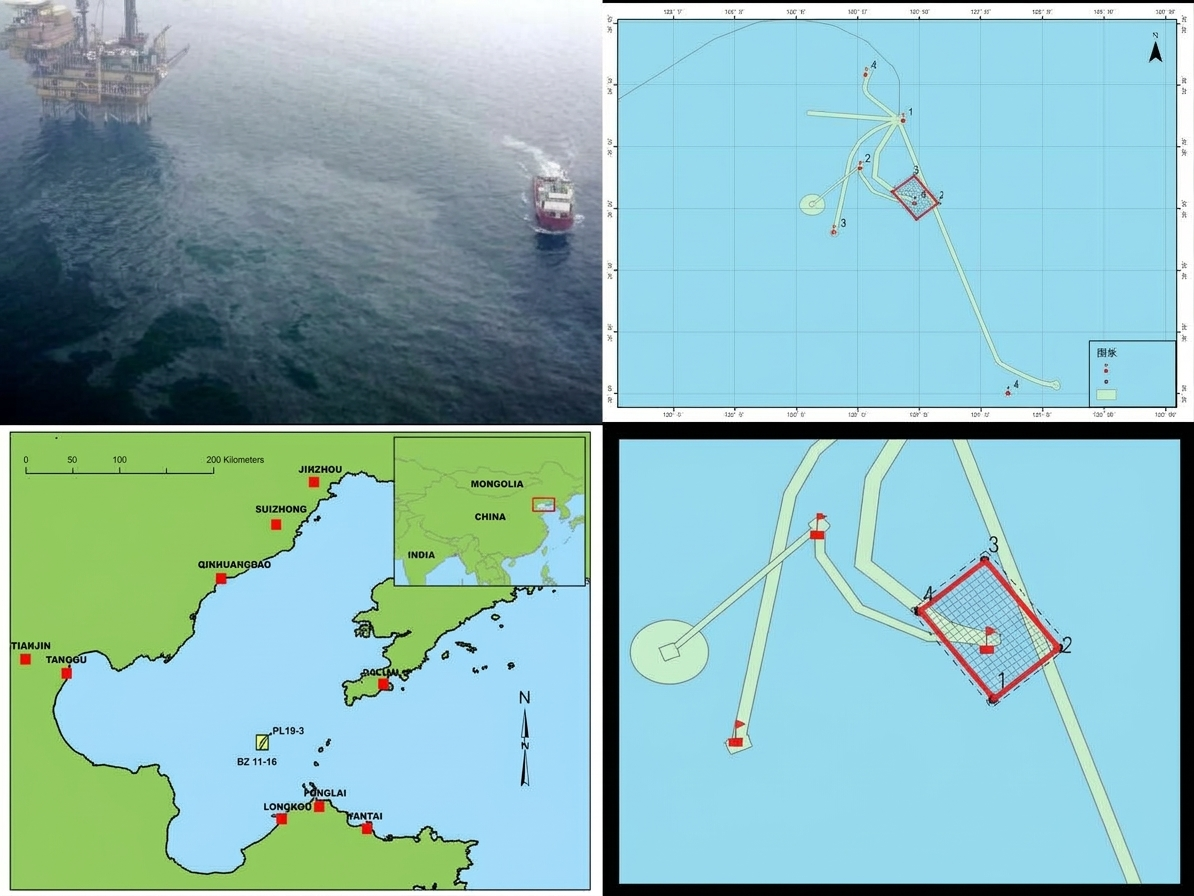
Application Case: Demonstration Project for In-Situ Microbial Remediation of Sediments in a Public Waters
An in-situ sediment remediation demonstration project was conducted across approximately 670,000 km² of marine waters affected by an oil spill. More than 360 metric tons of microbial agent were deployed, followed by post-remediation monitoring. Petroleum hydrocarbon concentrations at monitoring stations surrounding the oil spill platform decreased significantly, with degradation rates reaching up to 90%.
(1)Remediation Area
The sediment remediation area is located in the central marine region, at a water depth of approximately 28 m. Near-bottom current speeds are around 2 knots. The seabed sediments consist primarily of clayey silt. Offshore platforms and subsea pipelines are located in the vicinity of the remediation area.
(2)Development of Safe and Highly Efficient Petroleum-Degrading Microbial Agents
The development of microbial agents prioritizes indigenous microbial strains with low environmental risk. Indigenous strains isolated and screened from sediments in oil-spill-affected marine areas can effectively prevent the invasion of non-native strains and minimize changes to the ecological structure and functions of the remediation area.
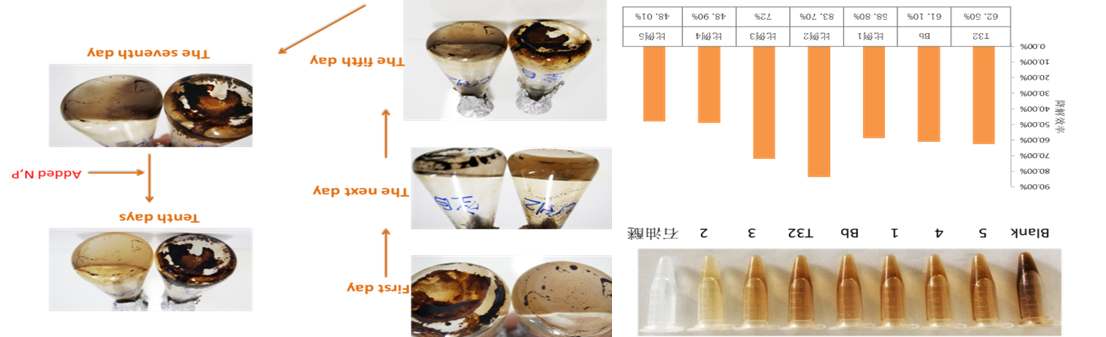
In laboratory tests, strains achieving petroleum degradation efficiencies of over 80% within 7 days were selected. These included Bacillus subtilis (strain ID: Bs), Bacillus amyloliquefaciens (strain ID: Ba), Bacillus safensis (strain ID: Bb), Bacillus cereus (strain ID: KF8), Acinetobacter calcoaceticus (strain ID: T32), Pseudomonas putida (strain ID: SP1), Acinetobacter sp. (strain IDs: HC8-3 and LKG-A), Oceanimonas baumannii (strain ID: N6), and Bacillus pumilus (strain ID: BPL-1), among others.
Taking into full consideration the synergistic interactions among microbial communities, different combinations of strains were evaluated to identify the combination with the highest petroleum degradation efficiency. Laboratory-scale and pilot-scale tests were then conducted to determine the petroleum degradation performance of the selected microbial consortium. The safety of the strains was also assessed, including acute toxicity tests in mice and acute toxicity tests on marine organisms.
(3)Microbial Culture Fermentation and Microbial Agent Processing
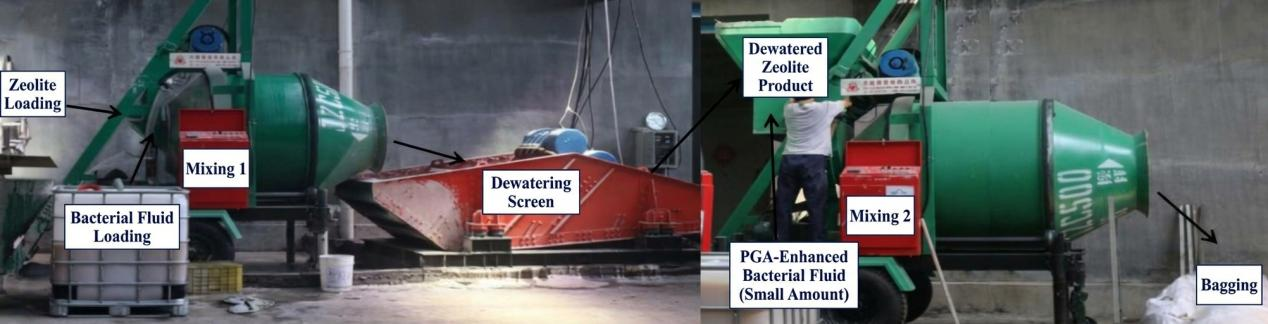
The microbial fermentation process was investigated, including the composition of the culture medium, pH, fermentation temperature, aeration and agitation in the fermenter, the concentration and condition of the culture during transfer between fermentation tanks, fermentation duration, and the determination of key fermentation stages. A three-stage fermentation process was carried out for the microbial culture.
In the remediation area covered by this project, the average water depth is approximately 25–30 m. If the microbial culture were delivered directly to the seabed, only a small proportion of the remediation microorganisms would reach the sediments. To ensure that large quantities of highly efficient petroleum-degrading strains reach the seabed sediments, the fermented microbial culture must undergo further processing.
The processing methods include carrier adsorption, aggregation, and encapsulation. These techniques can effectively reduce the dispersion and loss of microbial agents during deployment while also minimizing the impact of the introduced microbial strains on non-contaminated marine areas.
(4)Microbial Agent Deployment
The high cost of offshore operations and the limited margin for error pose significant challenges to the research, application, and development of marine oil-spill pollution remediation technologies.
Before deploying the microbial agents, comprehensive deployment simulation tests must be conducted, including numerical simulations and laboratory-scale deployment simulations. Based on the simulation results, the appropriate packaging size and deployment coverage area can be determined, thereby maximizing the safety and feasibility of offshore operations.
To ensure effective microbial agent deployment and successful petroleum remediation, the entire process—including deployment operations, the quantity of microbial agents applied, and remediation performance—can be monitored through multiple methods, such as aerial remote sensing, surface-level video surveillance, and underwater monitoring. These monitoring measures help ensure the smooth implementation of the project while providing valuable technical references and methodologies for future projects of a similar nature.
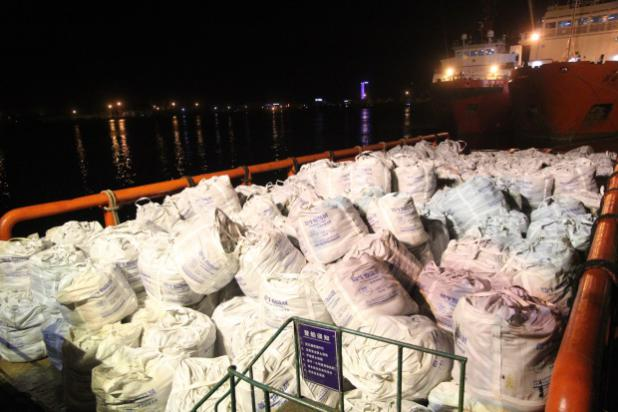
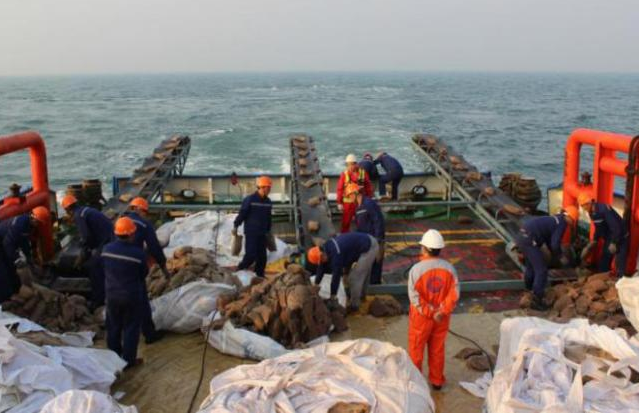
Offshore Operations
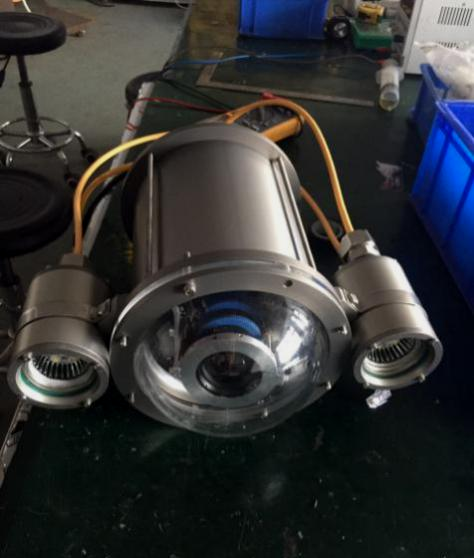
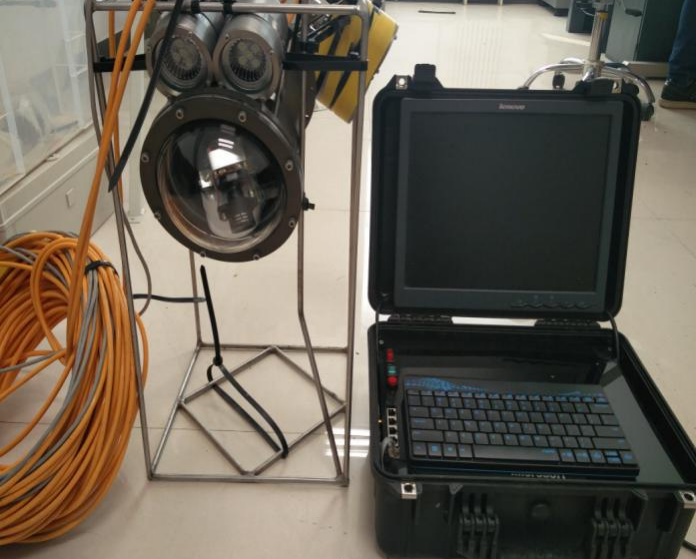
Independently Developed Underwater Monitoring Equipment
(5)Remediation Effectiveness Assessment
The remediation effectiveness assessment included one baseline survey before microbial agent deployment and two follow-up monitoring surveys after deployment.
The main monitoring parameters included conventional water quality indicators (DO, phosphate, total phosphorus, inorganic nitrogen, total nitrogen, etc.); petroleum concentrations in surface water and sediments; total bacterial counts in formation water and sediments; the relative abundance of petroleum-degrading strains before and after remediation; and changes in microbial community diversity and abundance before and after remediation.
Following remediation, the petroleum concentration decreased from a baseline value of 1,260 × 10⁻⁶ to 210 × 10⁻⁶ in the first follow-up survey conducted 70 days after deployment. In the second follow-up survey, conducted 210 days after deployment, the petroleum concentration decreased further to 155 × 10⁻⁶. At monitoring stations near the oil spill platform, the average petroleum degradation rate was 56.34% after 70 days and 70.14% after 210 days.
The community structure of macrobenthic and meiobenthic organisms showed no substantial differences before and after remediation. Following remediation, benthic biomass, diversity, and abundance increased slightly, and the biological communities at the remediated stations showed greater similarity to those in uncontaminated marine areas.
The implementation of this project helped address petroleum contamination in sediments in the central marine region of [Location]. It also tackled various challenges involved in translating scientific research findings and technologies into practical engineering applications. In addition, new approaches were explored in the design and application of laboratory simulation equipment for offshore operations.
To support microbial agent deployment in seawater and subsequent follow-up monitoring, independently developed surface and underwater monitoring equipment was designed and deployed. During offshore operations, the project team also investigated existing limitations of the monitoring equipment and explored feasible solutions to address them.
Following project implementation, petroleum concentrations in sediments across the designated area decreased significantly, accompanied by a degree of ecological recovery. The project represents a successful demonstration of marine ecological restoration, delivering substantial social and ecological benefits.
Post time: Oct-12-2026